-

English
-
Japanese
-
Korean




Selling on Amazon through FBA remains one of the fastest ways to reach millions of Prime members and win the Buy Box. But the fee landscape in 2026 is more intricate than ever, with costs that reach far beyond the simple pick-pack-ship charge most sellers budget for. Each year brings new adjustments—some well-publicized, others buried in policy updates—that silently chip away at margins on even the best-selling ASINs. This guide breaks down every FBA fee category, explains how they interconnect, and gives you a clear method to calculate your true, fully loaded cost per unit. Whether you’re launching your first product or managing a catalog of hundreds, understanding this full picture is the difference between a profitable FBA operation and one that bleeds cash.
The FBA Value Proposition in 2026 (Brief Context)
Amazon FBA continues to offer a powerful trade-off. You gain the Prime badge, instant trust from customers conditioned to two-day or faster shipping, and a significant advantage in the Buy Box algorithm. Returns, customer service, and the logistical heavy lifting are handled for you. In return, you accept a complex, multi-layered fee structure and give up the kind of fine-grained control over fulfillment that a dedicated warehouse provides. For many brands, FBA remains the core of their Amazon strategy. For others, rising fees have made a hybrid approach—mixing FBA with FBM or a 3PL—the new normal. Understanding the fees is the first step to deciding where your products belong.
Core FBA Fee Categories: The Non-Negotiables
These are the fees every FBA seller pays on every order, and they form the baseline of your fulfillment cost model.
Fulfillment Fees (Pick, Pack, Ship)
The per-unit fulfillment fee is the headline charge. It covers picking your item from the shelf, packing it in Amazon’s standard packaging, and shipping it to the customer. The fee is determined by the product’s size tier (small standard, large standard, large bulky, oversize, etc.) and its shipping weight, calculated using either dimensional weight or actual weight, whichever is greater. In 2026, size tier boundaries remain critical; a product just over the small-standard limit can see its fulfillment fee jump by a dollar or more.
Special categories add surcharges. Apparel items incur an additional per-unit fee. Footwear has its own rate. Products classified as dangerous goods (hazmat) carry a premium that can add several dollars per unit and often require specific prep. For sellers offering low-priced items under $10, Amazon may still offer reduced fulfillment fees through programs like Low-Price FBA, though these discounts have narrowed over time and should be verified for 2026. These core fees are non-negotiable and adjusted annually, usually in January or February.
Monthly Inventory Storage Fees
Storage is charged per cubic foot per month, calculated on the daily average volume of your inventory in Amazon fulfillment centers. The rate varies by product category and season. Standard-size goods have one rate; oversize items have a higher rate. Then, from October through December, storage fees roughly triple. Sellers who fail to plan for this seasonal surge can see their storage costs eclipse their fulfillment fees during the holiday quarter. Hazardous materials stored in specialized facilities carry another, often higher, rate. Storage is an invisible drip that accelerates dramatically as inventory ages or sits through peak season.
The Fee Most Sellers Miscalculate: Inbound and Placement
Getting your inventory into Amazon’s network is not free, and the rules shifted significantly with the introduction of placement fees.
Inbound Transportation (Partnered Carrier vs. Your Own)
You have two primary ways to get goods to Amazon: use Amazon’s partnered carrier (SPD for small parcel, LTL or FTL for pallets) or arrange your own freight. Partnered carrier rates are discounted but not always the cheapest, especially for full truckloads. The real cost complexity, however, lies in where Amazon asks you to ship. The inbound placement service fee, rolled out in recent years and refined since, charges you based on how many different fulfillment centers your shipment must be split across. Sending inventory to a single location often incurs a fee; shipping to multiple locations as directed by Amazon’s system can reduce or eliminate it. In 2026, sellers must weigh the cost of splitting pallets (more work, possibly higher freight) against the placement fee. For smaller shipments, the per-unit placement fee can silently add $0.20 to $0.50 or more to each item’s landed cost before it’s even available for sale.
FBA Prep and Labeling
Amazon requires items to arrive ready for fulfillment, which means they must be properly labeled with an FBA barcode (FNSKU) and, in many cases, poly-bagged, bubble-wrapped, or otherwise prepped. You can do this yourself or pay Amazon to do it. Prep service fees are per-unit and cover tasks like applying an opaque bag to adult products, bubble wrapping fragile glass, or labeling individual items. The labeling service fee itself is modest, but it adds up. Sellers who use the manufacturer barcode instead of the FNSKU avoid labeling costs but accept the risk of commingling—where their authentic inventory gets mixed with potentially counterfeit units from other sellers. In 2026, the choice between commingling and labeling remains a cost-versus-risk calculation that every seller should make consciously.
The Layer of “Adjusted” Fees: Inventory Performance and Surprises
Beyond fulfillment and storage, Amazon imposes a set of fees designed to shape seller behavior and punish poor inventory management.
Low-Inventory-Level Fee (2024 Onward)
Introduced to pressure sellers into keeping popular items well-stocked, this fee charges you when your inventory level dips below a certain threshold relative to demand. It penalizes both out-of-stock events and long-tail items with sporadic sales. For sellers with large catalogs of slow-moving ASINs, this fee can effectively function as a permanent surcharge on every unit sold, simply because maintaining enough stock across thousands of SKUs is economically unfeasible. The exact thresholds and rates may evolve, but in 2026, the fee remains a fixture that makes lean, just-in-time inventory strategies more expensive on Amazon.
Aged Inventory Surcharge (Long-Term Storage)
Inventory that sits in fulfillment centers for more than 271 days attracts a monthly long-term storage surcharge on top of the regular storage fee. This fee escalates significantly after 365 days. It is designed to force sellers to liquidate or remove slow-moving stock. During post-holiday cleanouts in January and February, many sellers face a nasty surprise: storage fees plus aged inventory surcharges that turn unsold inventory into a cash drain. The combined effect can be devastating for seasonal goods or products that sell steadily but slowly.
Removal and Disposal Fees
When you decide an item is no longer worth storing, you must pay to have it removed or disposed of. Removal fees are per-unit and vary by size and weight. Disposal is cheaper than return-to-seller but still costs money. Amazon also offers a liquidation program that recovers some value from unsellable or excess inventory, often at pennies on the dollar, but it stops the storage fee meter. In 2026, Amazon continues to make it more economical to liquidate than to ship inventory back to yourself, aligning with its broader push toward a leaner fulfillment network.
Returns Processing: The FBA Margin Killer
Amazon’s generous return policy drives sales, but it also generates a cascade of costs that many sellers underestimate.
When a customer returns an FBA item, you are charged a returns processing fee. This fee covers receiving the item, inspecting it, and deciding its fate. If Amazon determines the item is sellable, it goes back into inventory. If it is damaged by the customer or otherwise unsellable, you are left with a removal or disposal fee on top of the returns processing charge. There is also a refund administration fee that applies to many categories, taking a slice off the refunded amount. The effective cost of a return can easily exceed the original fulfillment fee, especially for lower-priced items. Worse, unsellable returns that linger in inventory quietly accumulate monthly storage fees until you take action, compounding the loss. Returns are not an occasional cost to absorb; they are a structural expense that should be modeled into every unit’s economics at your actual return rate.
Unplanned and Ancillary Services
These fees hit when something goes wrong with your inbound shipment or your inventory setup.
Unplanned prep fees apply when items arrive at the fulfillment center without the required prep or labeling. The per-unit penalty is high—meant to be a deterrent—and can turn a modest shipping error into a significant cost overrun. Similarly, if your product dimensions or weight are incorrectly entered in Seller Central and the item is discovered to be oversized or overweight, Amazon will charge back the difference in fulfillment fees and may apply a surcharge. For sellers using Multi-Channel Fulfillment (MCF) to fill orders from other channels, the MCF fee schedule is separate and typically higher than standard FBA fulfillment fees. And if your inventory levels exceed your assigned storage limits, you may incur an overage fee that adds yet another layer to your cost structure.
The Silent Costs: What FBA Doesn’t Cover
Beyond the line items on your payment report, FBA imposes indirect costs that shape your entire Amazon business.
As fees rise, many sellers raise prices to preserve margin. Higher prices can weaken conversion rates and increase the advertising cost of sale (ACoS) required to maintain the same sales velocity. So a fee increase can trigger an ad spend increase, magnifying the financial hit. Amazon handles customer service and returns, which is valuable, but the cost of that service is baked into the fees you pay. Chargebacks and A-to-Z claims may be managed by Amazon, but you foot the bill through the return and refund fees already discussed. Finally, lost or damaged inventory in Amazon warehouses is reimbursed—but often after a delay and at a valuation that may not reflect your true landed cost. The gap between losing inventory and receiving a credit can create cash flow headaches and inventory planning inaccuracies.
2026 Fee Outlook: What Sellers Should Brace For
Amazon has a well-established pattern of announcing fee changes in late fall, effective early the following year, with occasional mid-year adjustments for specific programs. In 2026, fuel surcharges, wage increases in logistics hubs, and broader inflationary pressure will likely push fulfillment and inbound transportation fees higher. Policy trends point to Amazon continuing to transfer costs that were once absorbed internally—like optimal inventory placement and low stock buffering—onto sellers. The fee structure rewards sellers who ship in full truckloads, maintain high inventory turnover, and keep their products in the smallest possible size tiers. Amazon’s Fee Calculator and Revenue Calculator remain essential tools, but their accuracy depends entirely on the dimensions and rates you input. A pre-holiday fee audit, conducted before the seasonal storage increase, is one of the most cost-saving exercises a seller can perform.
How to Calculate Your True FBA Cost Per Unit
A single ASIN’s true FBA cost is rarely captured by one line item. Use this formula to build a fully loaded picture over a given period:
True FBA Cost Per Unit = (Fulfillment fees + Storage fees + Inbound transportation + Prep and labeling + Returns processing fees + Aged inventory surcharges + Low-inventory fees + Removal/disposal fees + Any unplanned fees) ÷ Total units sold in that period
Let’s walk through a simplified but realistic example for a standard-size product sold at $25, with a moderate return rate and seasonal inventory patterns:
- Fulfillment fee: $3.22 per unit
- Monthly storage: $0.08 per unit (averaged over the year)
- Inbound placement fee: $0.25 per unit
- Inbound transportation (LTL): $0.15 per unit
- Prep and labeling done by seller: $0.00
- Returns processing (10% return rate, $2.50 fee per return): $0.25 averaged per unit sold
- Aged inventory surcharge on 5% of units: $0.10 per unit sold
- Low-inventory fee on another SKU: $0.05 per unit sold
- Removal of unsellable returns: $0.04 per unit
- Total all-in FBA cost: approximately $4.14 per unit
For a $25 item, that’s over 16% of the sale price going to FBA costs alone—before Amazon’s referral fee, advertising, and cost of goods. The fulfillment fee by itself was only $3.22. The extra $0.92 consists of costs that are easy to overlook but entirely real. This is why comparing FBA to a competitive U.S.-based 3PL requires modeling the all-in number, not the headline rate.
Strategies to Reduce FBA Costs in 2026
Reducing FBA fees is less about negotiating (you can’t) and more about making operational choices that align with Amazon’s incentive structure.
FBA vs. a Local U.S. 3PL: A Cost Comparison Framework
For many growing brands, the question in 2026 is no longer FBA or nothing. It is FBA, a 3PL, or a combination of both.
When you compare FBA’s fully loaded per-unit cost with that of a domestic 3PL, several differences emerge. FBA fees are rigidly standardized and unbundled; a 3PL may quote an “all-in” pick-pack-ship rate that includes storage, but hidden costs can exist there too, as any seasoned seller knows. The real advantage of a 3PL often lies in flexibility: you can use custom packaging, build bundles and kits, and manage inventory across multiple sales channels without duplicating stock. A transparent, local U.S.-only fulfillment partner can provide predictable pricing without the intricate surcharge ecosystem that Amazon layers on. The right choice depends on your product mix, your sales channels, and whether the Prime badge’s conversion lift justifies the fee premium. For many sellers, the optimal model is to keep Prime-sensitive SKUs in FBA while routing bulkier, slower-turning items through a reliable domestic 3PL.
Conclusion
Amazon FBA remains an extraordinary engine for reaching customers at speed and scale, but only if you price that engine accurately into your business. The fulfillment fee you see in Seller Central is the starting point, not the sum total. Storage, inbound placement, returns, aged inventory penalties, and a dozen smaller charges layer on top, and each of them grows as your inventory performance weakens or as peak season arrives. The difference between a profitable FBA seller and one who quietly loses money often comes down to whether they have modeled the full fee stack or simply trusted the headline rate.
Before you place your next purchase order or set your next sale price, audit your five highest-volume ASINs with the fully loaded formula above. Then stress-test those numbers with even a 3–5% fee increase, because history suggests it will come. FBA fees are the cost of doing business on Amazon. Paying them is not a problem; not knowing exactly how much you are paying is.

Linkw
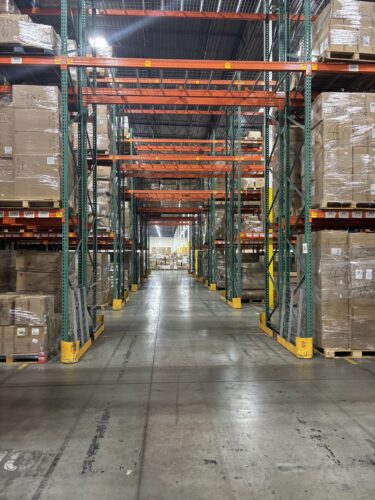
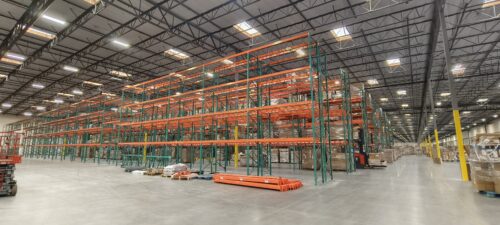
Our large-scale warehouses span 958,000 square feet across five branch offices in the US.
Table of Summary