-

English
-
Japanese
-
Korean



For cross-border e-commerce brands, managing the supply chain from a factory floor in Asia to a customer’s doorstep in North America is a logistical marathon. To simplify this massive undertaking, many brands fall for the pitch of the “all-in-one” logistics provider—a single company claiming to flawlessly manage ocean freight, customs brokerage, drayage, warehousing, and final-mile delivery under one roof.
On paper, this end-to-end integration sounds like operational nirvana. The promise of a “single pane of glass” to view your entire supply chain is a powerful sales tool. In reality, however, it is a dangerous illusion that routinely fractures when exposed to the high-stakes pressure of U.S. domestic commerce.
The mechanics of moving a 40-foot shipping container across the Pacific are fundamentally different from picking, packing, and delivering a localized parcel under a strict two-day SLA. When brands force a single freight forwarder to act as their domestic fulfillment center, they inevitably suffer from botched inventory counts, missed deliveries, and catastrophic B2B chargebacks.
Here is a deep dive into why separating your international freight from your domestic operations—and anchoring it with a dedicated U.S. fulfillment partner—is the only way to scale securely.
The Freight vs. Fulfillment Disconnect: Two Different Languages
The core issue with the “all-in-one” model is that international freight and domestic fulfillment are two entirely different operational disciplines. They require completely different physical infrastructures, labor models, and software stacks.
1. The Software Chasm (FMS vs. WMS)
Freight forwarders operate on Freight Management Systems (FMS). These systems are built to track macro-level data: vessel schedules, Bill of Lading (BOL) numbers, TEUs (Twenty-Foot Equivalent Units), and customs clearance status.
Fulfillment, however, is a micro-discipline. It requires a sophisticated Warehouse Management System (WMS) that tracks operations at the individual SKU level. A WMS must handle real-time inventory allocation, automated weight verification, complex kitting instructions, and dynamic parcel routing based on shipping zones. When an all-in-one provider tries to force domestic pick-and-pack operations through a freight-first software stack, the result is a massive data blind spot exactly when the inventory hits U.S. soil.
2. The Asset-Light Brokerage Trap
Most international freight forwarders are “asset-light” brokers. When they offer you U.S. warehousing as part of a bundled package, they rarely own the facility, operate the software, or employ the floor workers. They are simply subcontracting your goods to a generic, third-party 3PL.
This inserts a hidden middleman into your supply chain. When an urgent VIP order drops or a sudden stockout occurs, your account manager at the freight forwarding company has no physical control over the warehouse floor. They have to submit a ticket to their subcontracted partner and wait, destroying your brand’s agility.
The Cascading Costs of the Illusion
Relying on a freight-first company for domestic fulfillment routinely leads to three margin-crushing failures in the U.S. market:
- Peak Season Gridlock: A subcontracted warehouse treats your brand as secondary volume. During the Black Friday/Cyber Monday (BFCM) surge, when order volumes spike by 400%, these facilities prioritize their direct, anchor clients. Because your freight forwarder does not own the building, they cannot force the warehouse to prioritize your pallets. Your orders sit on the dock, SLAs are missed, and customer churn skyrockets.
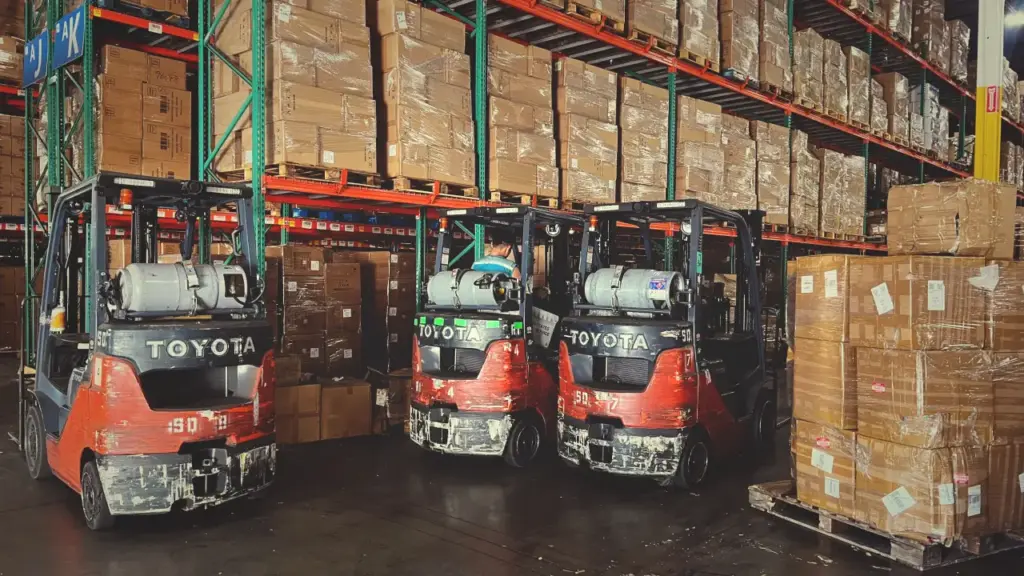
- The Oversize / Bulky Goods Disaster: Standard 3PLs favored by freight brokers are designed for small, lightweight parcels (like apparel or cosmetics). If you sell oversized goods (like modular sofas, outdoor fire pits, or bulky fitness equipment), these generic warehouses become a liability. They will often “floor-load” your inventory—massively inflating your storage costs—and lack the specialized clamp trucks needed to handle heavy items securely, leading to devastating transit damage.
- B2B Wholesale Chargebacks: If your brand lands a lucrative Purchase Order from a major U.S. retailer like Target or Walmart, your warehouse must flawlessly execute 100-page routing guides, precise EDI integrations, and exact Ti-Hi (Tie-High) pallet configurations. Subcontracted, freight-forwarder-managed warehouses almost always fail these strict compliance metrics. A single misapplied SSCC-18 barcode label can trigger thousands of dollars in retailer chargebacks, quickly erasing the profit of the entire PO.
The Strategic Playbook: Decoupling for Operational Control
To build a resilient cross-border supply chain, brands must actively decouple international transit from final-mile execution.
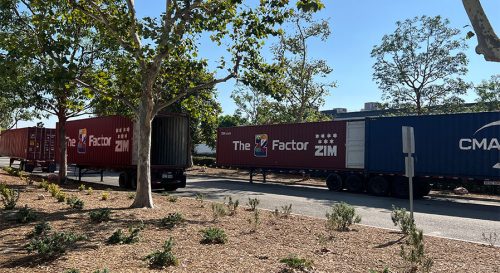
You should absolutely leverage highly capable freight forwarders to manage ocean capacity, secure favorable port drayage, and navigate the complex maze of U.S. Customs (CBP). Let them do what they do best: move containers and clear borders.
But the moment that inventory clears the port, the strategy must shift. The freight must be injected into a specialized, self-operated domestic fulfillment network.
Having a dedicated U.S. anchor provides two massive advantages:
- Strategic Decentralization & Zone Skipping: Instead of dumping all inventory into a single port-adjacent warehouse dictated by the freight forwarder, a dedicated domestic partner helps you distribute your goods strategically across regional gateways (e.g., East Coast, West Coast, South). This drastically lowers final-mile parcel costs and speeds up transit times, bringing you closer to the end consumer.
- Absolute Physical Control: By utilizing an asset-heavy partner that actually holds the warehouse leases, develops the WMS, and employs the dedicated workforce, you guarantee SLA compliance. There are no middlemen.
Anchoring Your Supply Chain with LinkW
While navigating international freight is critical, executing the final mile dictates your brand’s ultimate survival in the U.S. market. This is where the strategic decoupling of your supply chain pays off.
Once your international freight partner successfully clears your goods through U.S. customs, LinkW serves as your ultimate domestic anchor. Operating a robust, self-operated fulfillment network strategically positioned across core U.S. logistics gateways, LinkW takes absolute physical ownership of your inventory the moment it hits domestic soil.
Unlike the fragmented, subcontracted warehouses used by “all-in-one” brokers, LinkW’s asset-heavy infrastructure is precision-engineered specifically for the complexities of U.S. commerce.
Whether it is mitigating oversize carrier surcharges with specialized handling equipment, guaranteeing BFCM SLAs through a dedicated core labor force, or flawlessly executing strict big-box retail routing guides, LinkW provides the operational certainty that generic freight forwarders simply cannot.
Stop settling for the all-in-one illusion. Let your freight forwarders move the ships, and anchor your final mile with LinkW.

Linkw
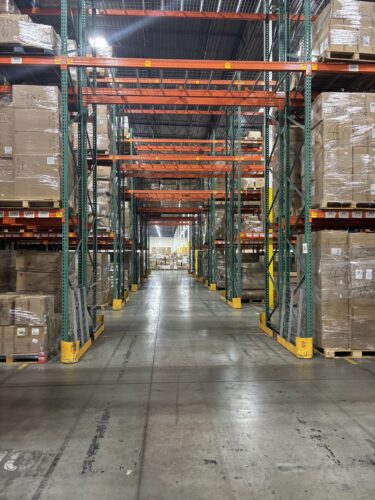
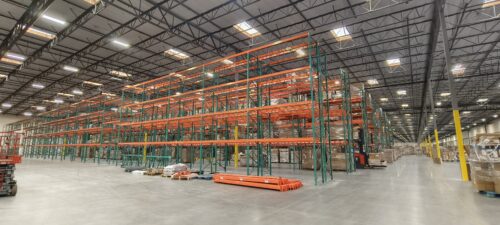
Our large-scale warehouses span 958,000 square feet across five branch offices in the US.
Table of Summary