-

English
-
Japanese
-
Korean



During off-peak months, almost any logistics provider can deliver a package within two days. With low order volumes and empty carrier trailers, software platforms can easily route orders across third-party facilities to simulate a high-performance network.
When the Q4 peak season arrives—bringing massive promotional surges across Black Friday, Cyber Monday, and holiday shopping windows—the asset-light logistics model systematically collapses.
For high-growth enterprise brands and digitally native vertical brands (DNVBs), failing to meet delivery promises during peak season leads to high customer acquisition cost (CAC) write-offs, marketplace penalties, and permanent churn.
The structural failure of asset-light 3PLs and 4PL broker networks during high-volume periods stems from physical constraints that software cannot solve, highlighting the operational necessity of self-operated fulfillment infrastructure for resilient two-day ground delivery.
The Illusion of the Asset-Light “Virtual Network”
Asset-light 3PLs sell software interfaces that aggregate excess capacity across independent, third-party warehouse operators. While this model promises infinite scale without real estate overhead, it introduces critical vulnerabilities when carrier networks and warehouse docks hit maximum capacity.
1. The Subcontracted Priority Penalty
When peak volume surges, independent warehouse operators face labor shortages, congested docks, and tight carrier pickup windows. Because the facility owner earns higher margins from their direct enterprise clients than from subcontracted broker volume, brokered inventory is deprioritized.
When space gets tight, the broker’s orders are pushed to secondary shifts, resulting in missed service level agreements (SLAs) while the software dashboard shows orders stuck in “processing.”
2. Fractured Carrier Relationships and Dock Bottlenecks
Guaranteed two-day ground delivery relies heavily on high-volume carrier commitments and drop-trailer programs. Asset-light brokers rarely control the physical yard or dock doors of their partner facilities.
Without dedicated, high-volume carrier injection infrastructure at each node, individual partner warehouses must wait for standard daily live-loads. If a regional parcel carrier runs behind schedule or skips a pickup window, hundreds of pallets sit stranded on the loading dock.
3. The Zone Inefficiency Trap
Broker networks often promise distributed inventory across dozens of nodes. In practice, dynamically splitting inventory across independent third-party facilities during peak season creates unbalanced stockouts.
When a regional node runs out of a key SKU, the broker’s routing engine defaults to long-haul shipping from distant facilities. To maintain a two-day delivery promise, the brand must either absorb expensive expedited air freight rates or downgrade the shipment to ground transit across Zone 7 and Zone 8, missing the delivery window entirely.
Asset-Light Broker Networks vs. Self-Operated Infrastructure
The operational mechanics of outsourced broker networks contrast sharply with dedicated, self-operated fulfillment infrastructure during peak demand:
| Performance Metric | Asset-Light Partner Networks (Brokers / 4PLs) | Self-Operated Fulfillment Networks (LinkW) |
| Labor & Capacity Allocation | Outsourced to third-party facilities; deprioritized during multi-client peak surges. | Direct Operational Control: Internal labor pools and dynamic shifts scale specifically for your volume. |
| Dock & Yard Management | Relies on shared, third-party dock doors with limited carrier drop-trailer capacity. | Dedicated Carrier Infrastructure: High-capacity yards with dedicated drop-trailers and scheduled daily pulls. |
| Inventory Data Integrity | Fragmented WMS instances bridged by middleware; high risk of latency and phantom stock. | Single Native WMS: Real-time visibility across unified inventory pools for DTC, B2B, and FBA prep. |
| SLA Enforcement | Contractual penalties with zero physical recourse when third-party facilities miss cut-offs. | Direct Accountability: Complete oversight over pick-to-ship cycles and strict carrier cut-off times. |
| Two-Day Ground Reach | Unbalanced regional nodes leading to high Zone 7/8 long-haul shipping and high air freight surcharges. | Strategic Node Optimization: High-density inventory positioning to hit contiguous U.S. coverage via Zones 1–3. |
Engineering True Two-Day Ground Delivery at Scale
Executing consistent two-day or next-day delivery across the contiguous United States without expensive air freight requires deliberate physical logistics engineering.
- Unified Inventory Pool
All incoming orders—whether Shopify DTC, Amazon FBA, or B2B retail—are pulled from a single, centralized physical inventory source. - Automated Robotic Sortation & Laser Dimensioning
Orders are rapidly processed using Autonomous Mobile Robots (AMRs), instantly verified for accuracy by laser dimensioning tunnels, and packed for shipment. - Real-Time Dynamic Carrier Rate-Shopping
The warehouse management system instantly evaluates the most efficient outbound path, distributing parcels across three core networks:
- National Couriers: Direct fluid loading for FedEx and UPS.
- Regional Parcel Networks: Utilizing high-density regional carriers to secure next-day delivery for Zone 1 through Zone 3 shipments.
- Dedicated Line-Haul Injection: Bypassing localized bottlenecks via zone-skipping strategies.
- Guaranteed Delivery Execution
The finalized routing guarantees 48-hour contiguous U.S. ground delivery at the absolute minimum zone cost.
Strategic Bi-Coastal & Multi-Node Density
To minimize zone transit times, inventory must sit within major logistics corridors near primary consumer hubs. Positioning stock across dedicated, strategically located hubs—such as Southern California (Inland Empire) and the Northeast corridor—allows brands to cover the vast majority of the U.S. population within one to two transit days using standard ground services. This eliminates reliance on air freight and drastically reduces shipping expenses.
High-Speed Automation and Sorting
Manual picking processes break down under volume spikes. Enterprise-grade facilities integrate Autonomous Mobile Robots (AMRs), high-speed sortation conveyors, and inline laser-dimensioning systems. This technology ensures that orders placed up to late-evening cut-off times are picked, verified, packed, and sorted into carrier-specific gaylords within minutes of order receipt.
Direct Carrier Diversification and Drop-Trailer Integration
Relying on a single national parcel carrier during peak season exposes brands to volume caps and peak surcharges. A robust physical network leverages dynamic multi-carrier rate-shopping, routing shipments across national carriers, regional parcel networks, and specialized final-mile providers.
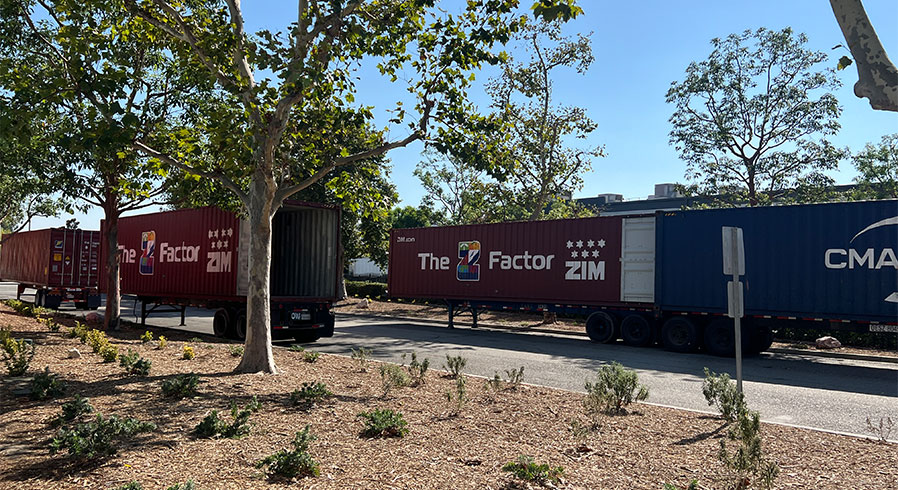
By maintaining dedicated drop-trailers on-site, parcels are loaded continuously throughout the day, ensuring seamless carrier departures regardless of external transportation network stress.
Scaling Peak Execution with LinkW
Protecting delivery speed, brand reputation, and profit margins requires a logistics foundation built on uncompromising operational control.
LinkW is engineered to serve as the definitive, self-operated U.S. fulfillment anchor for enterprise brands and high-growth omnichannel merchants. By bypassing asset-light broker networks and operating directly on the physical warehouse floor, LinkW delivers the capacity, speed, and resilience required to master high-volume peaks.
Operating a fully self-operated footprint of 958,195 square feet across strategic U.S. logistics hubs, LinkW provides the physical scale required for two-day ground distribution:
- 100% Self-Operated Authority: LinkW directly controls every square foot, automation system, and facility workflow. Your inventory is never subcontracted to third-party warehouses, eliminating the peak-season prioritization penalties common to broker networks.
- Strategic Ground Reach: Our multi-node domestic network places your inventory adjacent to primary population centers, allowing you to reach the vast majority of the contiguous U.S. within two days via economical ground networks while eliminating Zone 7 and Zone 8 penalties.
- Robotic Speed and Late Cut-Offs: Equipped with advanced Autonomous Mobile Robots (AMRs), automated dimensioning systems, and high-speed sortation, LinkW facilities process tens of thousands of orders daily with manufacturing-level accuracy and industry-leading shipping cut-off times.
- Robust Transportation Ecosystem: Supported by dynamic multi-carrier rate-shopping and strategic transport partnerships with over 20 vetted truck fleets managing more than 360 commercial vehicles, LinkW ensures steady drayage, fluid line-haul injection, and uninterrupted final-mile parcel execution.
Eliminate the uncertainties of outsourced logistics networks. Secure your peak-season execution and scale your U.S. supply chain with LinkW’s purpose-built, self-operated infrastructure.

Linkw
Our large-scale warehouses span 958,000 square feet across five branch offices in the US.
Table of Summary