-

English
-
Japanese
-
Korean



For enterprise brands scaling high-ticket categories—such as modular furniture, fitness equipment, industrial tech, and luxury home goods—logistics is not just a cost center; it is a critical margin protector. When a customer orders a $3,000 sofa or a heavy piece of smart fitness equipment, the expectation is flawless, undamaged delivery.
However, the vast majority of U.S. 3PLs are structurally engineered to handle lightweight, homogenous parcels. They optimize for small bins, narrow aisles, and fast-moving polymailers. When high-value, oversized SKUs are forced into this standard operational box, the results are catastrophic: high damage rates, massive dimensional weight (DIM) penalties, and reverse logistics costs that instantly erase profitability.
Executing the fulfillment of heavy and expensive items requires more than just extra space. It demands purpose-built physical infrastructure, specialized handling equipment, and uncompromising operational control.
The Anatomy of a Heavy-Goods Facility
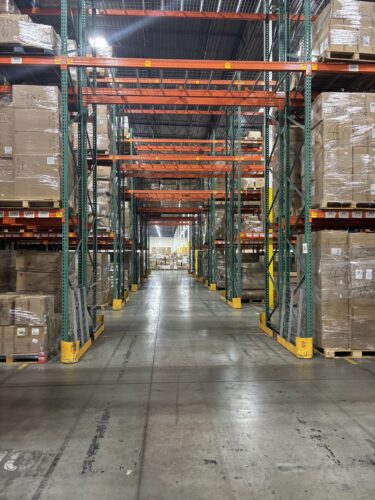
Standard fulfillment centers rely on high-density static shelving and VNA (Very Narrow Aisle) configurations to maximize vertical space. This environment is highly hazardous for oversized goods, leading to frequent forklift collisions and product compression.
To safely manage bulky, high-value SKUs, a logistics facility must be architected with specific physical parameters:
- Expansive Floor-Level Staging: Heavy items cannot be endlessly shuttled up and down from five-story racks. Facilities must have dedicated, high-capacity ground-level staging areas that allow for safe maneuvering and staging without stacking pressure.
- Specialized Material Handling Equipment (MHE): Standard standard forklifts easily puncture or crush oversized cartons. Handling bulky items safely requires specialized equipment like clamp trucks, slip-sheet attachments, and extra-wide pallet jacks that distribute pressure evenly across the product’s packaging.
- Wide Turning Radiuses: Aisle widths must be explicitly designed to accommodate the turning radius of large equipment carrying oversized loads, eliminating the scrape and collision damage inherent to cramped, high-density 3PLs.
The Hidden Cost of Asset-Light Networks
Many asset-light 3PLs claim they can handle bulky items, but because they outsource the physical floor to a network of independent partner warehouses, they cannot enforce uniform handling standards.
When a $2,000 fragile electronic component is handed off to a subcontracted facility, it enters an environment optimized for piece-rate speed, not precision. Workers accustomed to tossing lightweight apparel packages will apply the same aggressive handling to heavy freight. Without direct control over the floor labor, standard operating procedures (SOPs) for two-person lifts or specialized strapping are routinely ignored, leading to massive spikes in transit damage.
| Capability | Standard 3PL / Asset-Light Network | Heavy-Goods Enterprise Infrastructure |
| Aisle Architecture | Very Narrow Aisle (VNA) built for high-density small bins. | Wide-radius aisles engineered for clamp trucks and oversized pallets. |
| Handling Equipment | Standard forklifts and manual push-carts. | Specialized clamp trucks, heavy-duty cantilever racking, and automated dimensioning. |
| Quality Control | Subcontracted floor labor driven by piece-rate speed metrics. | Direct operational authority enforcing two-person lift SOPs and custom pallet wrapping. |
| Outbound Transit | Reliant on standard parcel conveyors that reject oversized cartons. | Dedicated ground-level dock doors for direct LTL and specialized fleet loading. |
Engineering Damage-Free Delivery with LinkW
Protecting the integrity of high-value, bulky inventory requires a logistics anchor that controls the physical environment from receiving dock to final-mile injection.
LinkW provides the specialized infrastructure required to scale heavy, high-ticket SKUs without the devastating friction of traditional warehousing. We do not force bulky goods into narrow aisles, nor do we outsource the handling of your most valuable inventory to fragmented partner networks.
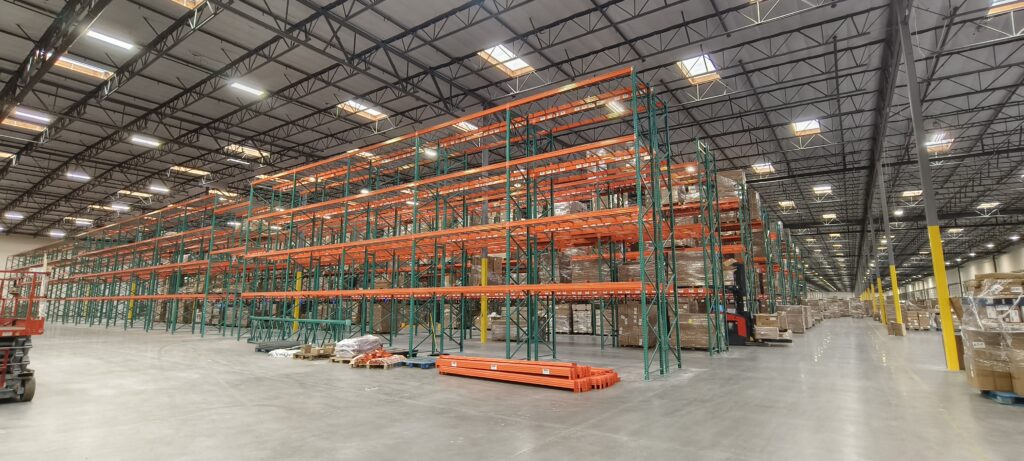
Our heavy-goods capabilities are anchored by an exacting physical footprint. Operating five self-operated facilities strategically located across Chino, Somerset, Old Bridge, Garden City, and Balch Springs, LinkW commands an exact footprint of 958,195 square feet. This massive scale provides the critical floor space, wide-aisle architecture, and dedicated heavy-racking required to safely maneuver and store oversized variants without the risk of collision or compression damage.
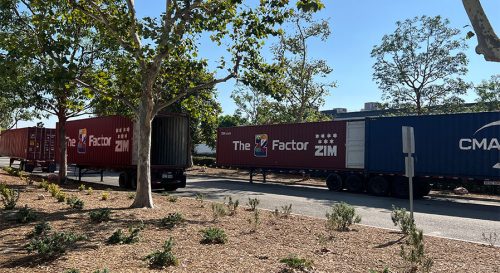
Beyond the four walls of the warehouse, heavy fulfillment demands a specialized outbound strategy. Standard parcel carriers frequently reject oversized items or apply punitive surcharges. To solve this, LinkW integrates our self-operated facilities with a strategic, light-asset transportation network. By partnering with over 20 specialized truck fleets managing more than 360 commercial vehicles, we seamlessly transition your heavy freight from our docks to highly vetted LTL and final-mile regional networks. This minimizes the number of touchpoints, bypasses standard parcel bottlenecks, and ensures that large, expensive shipments arrive at the customer’s door in pristine condition.

Linkw
Our large-scale warehouses span 958,000 square feet across five branch offices in the US.
Table of Summary