-

English
-
Japanese
-
Korean



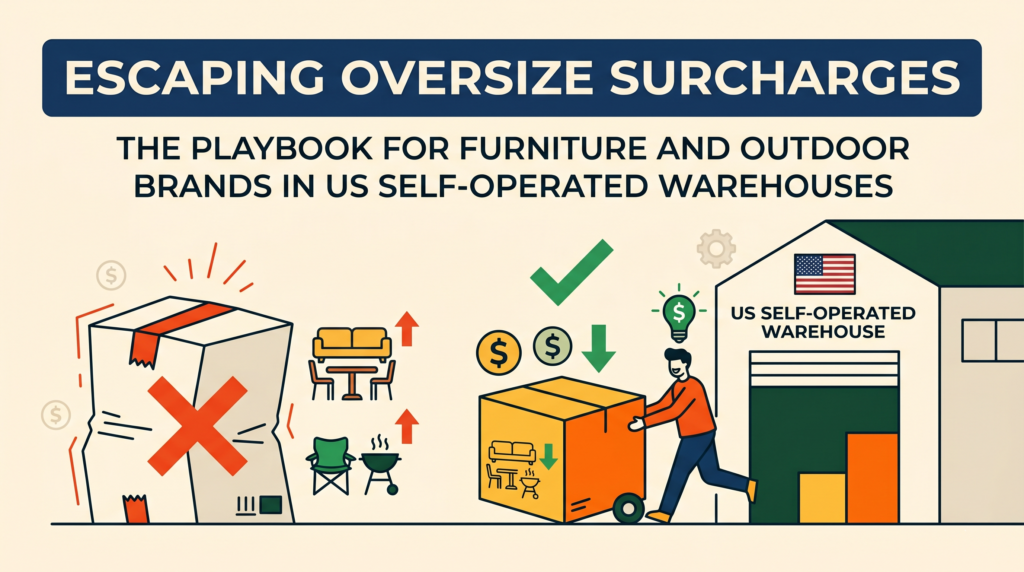
For Direct-to-Consumer (DTC) brands in the furniture and outdoor sectors—selling everything from modular sofas and heavy fire pits to expansive patio sets—the logistics landscape is inherently hostile. While apparel and cosmetic brands optimize for lightweight polymailers, bulky goods brands are fighting a relentless battle against courier pricing mechanics.
In recent years, major U.S. carriers have aggressively weaponized dimensional weight (DIM) pricing and oversize penalties. For a brand shipping large, heavy items, these surcharges are not just minor line-item annoyances; they are existential threats that can completely erode product margins.
To survive, furniture and outdoor brands must rethink their physical supply chain. The solution lies not in negotiating better carrier rates, but in bypassing the traps entirely through specialized, self-operated warehousing. Here is the operational playbook for escaping oversize surcharges.
The Anatomy of Carrier Penalties
To defeat oversize surcharges, brands must first understand exactly how the carrier networks penalize bulky freight. The standard parcel networks (like FedEx and UPS) are optimized for conveyor belts and automated sorters. Large, irregularly shaped, or heavy boxes disrupt this automation, requiring manual labor. Carriers pass this inefficiency directly to the merchant.
The financial bleed typically comes from three primary triggers:
| Penalty Type | The Carrier’s Trigger | The Financial Impact |
| Additional Handling Surcharge (AHS) | Packages exceeding specific weight limits (e.g., 50 lbs) or dimension limits (e.g., longest side over 48 inches). | A flat fee added per package, instantly erasing low-margin profitability. |
| Large Package Surcharge (LPS) | Packages where Length + Girth exceeds 130 inches, or length exceeds 96 inches. | Massive flat fees (often exceeding $100+) applied on top of base shipping rates. |
| Dimensional Weight (DIM) Pricing | A pricing technique that charges based on the cubic volume of a package relative to a carrier-defined “DIM divisor,” rather than actual weight. | You end up paying to “ship air.” A 40-lb bulky chair might be billed as if it weighs 90 lbs. |
The 3PL Trap: Why Standard Warehouses Fail Bulky Brands
Many furniture and outdoor brands attempt to outsource their fulfillment to standard Third-Party Logistics (3PL) providers, only to discover that these facilities are fundamentally incompatible with their product catalogs.
Shoehorning a sectional sofa into a fulfillment center designed for cosmetics and consumer electronics leads to operational disaster. Standard 3PLs rely on narrow aisles and dense, shallow shelving. When forced to handle oversized goods, they resort to inefficient “floor loading” (leaving pallets on the ground), which eats up massive amounts of square footage. They then pass these inflated storage costs back to the brand.
Furthermore, standard 3PLs lack the specialized handling equipment required for heavy goods. Moving a 150-pound outdoor dining table with standard forklifts or manual labor inevitably leads to high damage rates, triggering a secondary wave of costs: reverse logistics, product replacement, and reputational damage.
The Playbook: Leveraging Specialized, Self-Operated Hubs
To escape the crushing gravity of carrier surcharges and standard 3PL inefficiencies, leading furniture and outdoor brands are migrating to specialized, self-operated warehousing networks. This infrastructure-first approach attacks the problem at its physical root.
1. Advanced Carton and DIM Optimization
In a self-operated, highly controlled environment, operators don’t just blindly slap labels on boxes. They actively engineer the outbound shipment.
- Custom Box Cutting: Using automated carton-sizing machines, self-operated hubs can trim excess cardboard from a box before shipment. Shaving just two inches off the height of a patio chair box can drop it into a lower DIM bracket, saving tens of thousands of dollars across a high-volume quarter.
- Smart Kitting for Density: For multi-piece items (like a desk and a matching chair), intelligent Warehouse Management Systems (WMS) calculate whether it is cheaper to ship them in one consolidated oversize box, or split them into two standard-sized boxes to evade the Large Package Surcharge.
2. Purpose-Built Racking and Handling
A warehouse built specifically for bulky goods looks completely different from a standard 3PL.
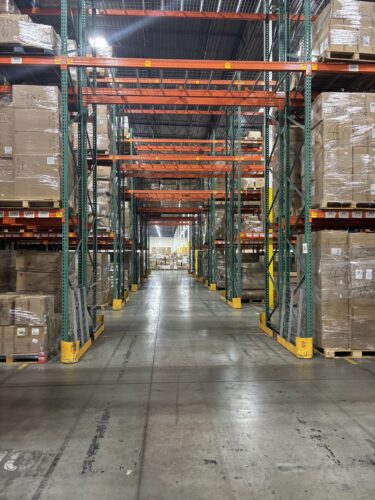
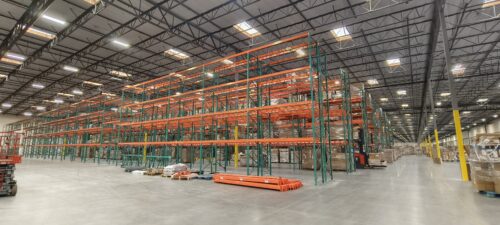
- Cantilever Racking: Instead of wasting floor space, specialized hubs utilize heavy-duty cantilever racks that allow long, awkward items (like outdoor umbrellas or bed frames) to be stored vertically and densely, drastically driving down monthly storage fees.
- Clamp Trucks and specialized MHE (Material Handling Equipment): Using clamp trucks rather than traditional forklifts allows operators to move heavy, boxed furniture securely without piercing the packaging, practically eliminating warehouse-induced damage.
3. Decentralization and Localized Injection
The longer an oversized package travels through a national carrier network, the more vulnerable it is to zone-based multiplier effects on surcharges.
By placing inventory in a distributed network of self-operated hubs—for example, staging West Coast inventory in Los Angeles, Southern inventory in Dallas, and East Coast inventory in New York or Savannah—brands fundamentally shorten the final-mile transit. A package that only travels within Zone 1 or Zone 2 avoids the compounding, distance-based geometry of oversize freight pricing.
For furniture and outdoor brands, ignoring physical infrastructure is no longer an option. Negotiating single-digit percentage discounts with carriers will not save a P&L that is being hammered by structural oversize surcharges.
True margin protection requires transitioning to a fulfillment environment built explicitly for your product profile. This is where LinkW fulfillment transforms your supply chain from a liability into a competitive weapon.
By partnering with LinkW, bulky goods brands gain immediate access to a robust network of specialized, self-operated US hubs designed specifically for oversized inventory. LinkW eliminates the inefficiencies of standard 3PLs by deploying heavy-duty cantilever racking, specialized clamp trucks, and advanced carton optimization technology.
Furthermore, LinkW’s strategic regional placement across key logistics gateways allows you to decentralize your inventory. This drastically shortens final-mile transit, ensuring your heavy items stay within local zones to evade compounding carrier penalties and minimize handling damage. In an industry where oversize surcharges dictate survival, LinkW provides the exact physical infrastructure required to protect your margins and scale with absolute certainty.

Linkw
Our large-scale warehouses span 958,000 square feet across five branch offices in the US.
Table of Summary