-

English
-
Japanese
-
Korean



The “shipping crisis” of the early 2020s taught the industry a painful lesson: when national parcel carriers hit capacity, your brand’s growth hits a brick wall.
In 2026, the challenge has evolved. We are no longer dealing with total global gridlock, but rather highly localized, unpredictable carrier capacity crunches. Whether it is a regional labor disruption, a sudden surge in marketplace volume, or localized severe weather events, the U.S. domestic logistics landscape is characterized by intense volatility. When a primary carrier declares a sudden “no-pick-up” day or slaps a temporary peak surcharge on your heaviest zones, brands relying on a single, fragile shipping strategy see their service level agreements (SLAs)—and their reputations—collapse overnight.
Top-tier enterprise brands have stopped hoping for macroeconomic stability; they are engineering their own resilience. Here is the operational playbook leading companies are using to build bulletproof U.S. fulfillment networks.
The Fragility of the “Single-Carrier” Monopoly
Many brands still operate with a legacy “set it and forget it” mentality, routing 100% of their volume through a single national parcel carrier to secure a perceived volume discount. In the current market, this exclusive reliance creates massive structural vulnerabilities:
- The “Volume-to-Priority” Trap: During periods of capacity crunch, national carriers protect their largest enterprise mega-contracts first. If you are a mid-market or high-growth brand, your volume is the first to be throttled. Your packages are left sitting on the dock while the carrier’s trucks fill up with Fortune 500 freight.
- Zone Sensitivity and Captive Pricing: National carriers constantly re-optimize their networks. A zip code that was “standard shipping” yesterday might be deemed “out-of-network” or hit with a localized surcharge tomorrow. If your warehouse is contractually tied to one carrier, you have no leverage to negotiate and no ability to route around these sudden price hikes.
- Zero Last-Mile Redundancy: When a primary carrier’s regional sorting hub experiences an outage, a single-carrier brand has no “Plan B.” Customer delivery estimates jump from 2 days to 7, leading to an immediate spike in WISMO (Where Is My Order?) tickets and devastating chargebacks from B2B retail partners.
The Resilient Playbook: Engineering Logistics Agility
To survive carrier volatility, the most successful brands have moved away from simple parcel shipping toward a multi-layered, data-driven logistics architecture.
Pillar 1: The Dynamic Multi-Carrier Strategy
Top brands no longer hand off their entire business to a single national courier. Instead, they utilize dynamic rate shopping at the warehouse level. By integrating their Warehouse Management System (WMS) with a diverse carrier mix—including national giants, regional parcel experts, and specialized last-mile providers—brands can route every single parcel based on real-time transit data. If Carrier A is experiencing a bottleneck in the Northeast, the WMS automatically routes Northeast-bound parcels to Carrier B, ensuring SLAs are met without manual intervention.
Pillar 2: Leveraging Regional Carrier Networks
One of the biggest shifts in 2026 is the aggressive utilization of regional carriers. These localized couriers operate incredibly dense networks within specific geographic footprints (e.g., the West Coast or the Sunbelt). Because they do not have the overhead of a national footprint, they often provide next-day or two-day delivery times at a fraction of the cost of a national carrier’s expedited service. A resilient fulfillment strategy seamlessly blends national carriers for broad coverage with regional carriers for high-density, high-speed zones.
Pillar 3: Zone Skipping and Deep Injection
To bypass origin-hub congestion entirely, enterprise brands utilize zone skipping. Instead of handing parcels over to a carrier one by one at the fulfillment center, brands consolidate hundreds of orders bound for a specific region (e.g., all West Coast orders originating from an East Coast facility) into a single Full Truckload (FTL). That truck drives directly to the carrier’s destination sorting hub, completely skipping the congested carrier network in the middle. This drastically reduces parcel transit times and slashes zone-based shipping costs.
Pillar 4: Real-Time Scorecarding and SLA Enforcement
Resilience requires visibility. Top operations teams do not just blindly hand off freight; they aggressively monitor carrier performance through real-time scorecarding. If a carrier’s on-time delivery rate drops below 98% for a specific zip code, the fulfillment partner’s tech stack detects the failure and instantly reallocates volume to a better-performing carrier, penalizing the failing carrier by withholding freight until their network stabilizes.
Building Your Resilient Anchor with LinkW
A sophisticated, multi-carrier supply chain cannot be executed inside a fragmented, asset-light 3PL. When carrier capacity tightens, standard 3PLs lack the physical dock space and technological integration to pivot.
To execute the enterprise playbook, you need physical infrastructure. LinkW serves as the operational anchor for brands that demand logistics resilience.
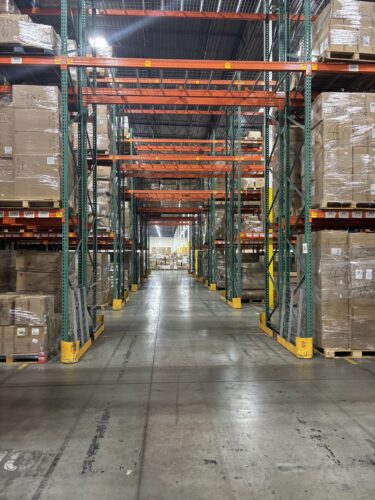
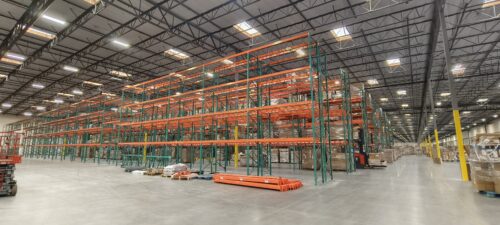
Operating a robust, entirely self-operated domestic network spanning exactly over 1 million square feet, LinkW provides the physical control and technological firepower necessary to thrive in an era of carrier volatility:
- Carrier Agnostic Routing: LinkW’s proprietary technology seamlessly executes dynamic multi-carrier rate shopping, instantly matching your parcels with the most efficient national or regional carrier based on real-time network health and SLA requirements.
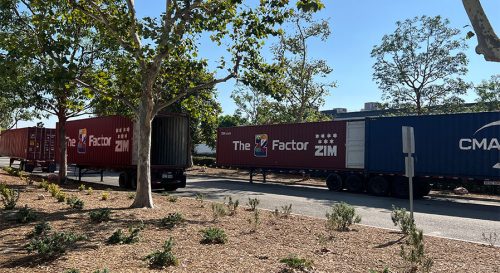
- Pre-Loaded Drop-Trailer Efficiency: LinkW’s massive staging lanes enable sophisticated drop-trailer programs. Instead of waiting for a carrier to manually load a truck, your freight is pre-loaded and ready to move. When a capacity crunch hits, pre-loaded trailers are prioritized by carriers because they require zero driver labor at the dock.
- Infrastructure for Zone Skipping: With our expansive footprint and deep relationships with enterprise freight lines, LinkW facilitates high-volume freight consolidation, executing flawless zone-skipping strategies that bypass gridlock and protect your margins.
- Advanced Warehouse Automation: We do not rely on manual brute force to hit your SLAs. LinkW facilities integrate cutting-edge warehouse automation to guarantee precision at scale. By deploying intelligent sorting systems, automated carton-sizing technology (crucial for protecting margins on oversized goods), and robotic-assisted pick paths, we execute massive order volumes with manufacturing-level accuracy.
Carrier capacity crunches are the new normal, not an anomaly. Stop letting carrier bottlenecks dictate your brand’s growth ceiling. Take absolute control of your final mile and build your U.S. fulfillment anchor on the operational stability of LinkW.

Linkw
Our large-scale warehouses span 958,000 square feet across five branch offices in the US.
Table of Summary