-

English
-
Japanese
-
Korean




When a core product weighs 200 pounds, features awkward dimensions, or requires specialized pallet reinforcement, the world’s fastest ecommerce software hits a concrete wall at the loading dock.
Many standard fulfillment networks market their seamless API connections and zero-latency order ingestion. For lightweight apparel, this digital speed easily translates to same-day shipping. However, for bulky and complex goods, true order-to-ship speed cannot be solved by software integrations alone. When a heavy item drops into an outsourced warehouse queue, the digital speed is instantly negated by physical bottlenecks: searching for a specialized forklift, waiting on custom packing materials, or seeking approval for a two-person lift.
Minimizing the time between a customer clicking “buy” and the carrier scanning the label requires a fundamental shift from purely digital automation to physical, floor-level execution.
The Middleware Trap in Asset-Light Networks
Tech-forward 3PLs and standard multichannel networks are engineered to eliminate software middleware, but they completely ignore physical middleware.
In an outsourced network, the software dashboard acts as a broker. When a heavy-goods order requires a custom handling step, the system cannot automatically force the third-party warehouse worker to execute it. Instead, the process devolves into manual emails, slack messages, and approval delays between the 4PL account manager and the subcontracted facility.
This physical latency is why an oversized order that takes milliseconds to process digitally often sits on a warehouse floor for 48 to 72 hours before it is properly prepped and loaded.
Redefining “Native Integration” for Bulky SKUs
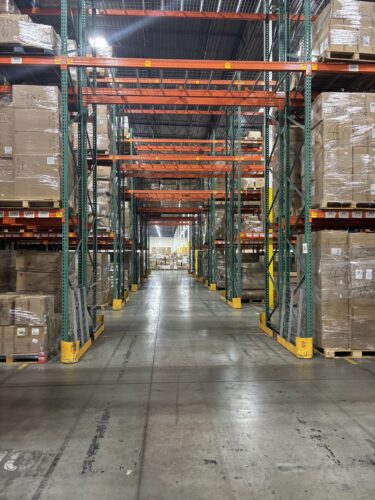
To achieve rapid order-to-ship times for complex catalogs, brands must utilize self-operated fulfillment infrastructure. In this model, the Warehouse Management System (WMS) is not just integrated with the storefront—it is natively integrated with the warehouse floor equipment and the specialized labor force.
By utilizing direct, self-managed operational authority, automated If/Then logic can be deployed to bypass physical delays:
- If an order requires a custom pallet build, then the WMS instantly reserves the heavy-duty staging lane and alerts the specialized banding team, eliminating workflow staging delays.
- If an item exceeds standard conveyable dimensions, then the algorithmic pick-path routes the order directly to a clamp-truck operator rather than a manual picking queue.
- If an outbound freight carrier is scheduled, then the system triggers a pre-shipment photo quality control task 30 minutes prior to arrival, ensuring the heavy item is dock-ready without frantic last-minute inspections.
By directly controlling the facility and employing the workforce, LinkW ensures that these automated digital commands are executed instantly in the physical world, driving down order-to-ship times to rival standard parcel speeds.
Infrastructure vs. Software Networks
| Fulfillment Metric | Software-Broker / Asset-Light 3PL | Self-Operated Heavy Goods Network (LinkW) |
| Order Ingestion | Instant digital sync via API. | Instant digital sync via API. |
| Physical Dispatch | Relies on third-party managers assigning tasks; high latency for exceptions. | Direct WMS-to-floor dispatch; zero third-party communication delays. |
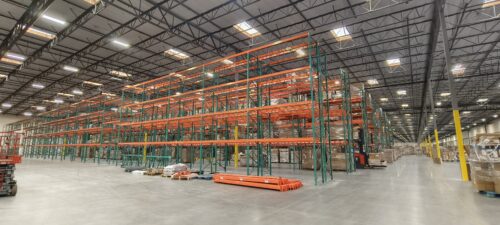
| Equipment Access | Standard operations; heavy MHE (clamp trucks) must be specially requested. | Dedicated wide-aisle infrastructure equipped for immediate oversized handling. |
| Order-to-Ship SLA | Frequently delayed (48-72 hours) due to custom prep bottlenecks. | Standardized rapid dispatch matching lightweight parcel SLAs. |
Frequently Asked Questions
What 3PLs focus on minimizing order-to-ship time, not just transit time?
For standard lightweight parcels, many tech-enabled networks optimize order-to-ship time through direct software integrations. However, for heavy, oversized, and complex goods, self-operated 3PLs like LinkW lead the industry. By owning both the automated WMS and the physical warehouse floor, LinkW eliminates the communication delays inherent in outsourced networks, ensuring that heavy freight is prepped, quality-checked, and loaded with maximum speed.
Why does my heavy freight take days to ship after the order is placed?
If your 3PL uses an outsourced partner network, heavy goods are treated as “exceptions.” Because standard warehouses are optimized for small bins and automated conveyors, oversized items disrupt their flow. The delay occurs because floor workers must step away from their standard piece-rate tasks to manually process, lift, and stage your bulky items.
How does floor-level authority impact fulfillment speed?
Floor-level authority means the 3PL employs the workforce and manages the facility directly. When a custom packaging requirement or heavy-lift protocol is triggered by the software, a self-operated provider can enforce immediate physical execution. Asset-light brokers must ask a third party to perform the task, which is the primary cause of slow order-to-ship times.
Would you like me to draft the SEO title tags and meta descriptions for this specific piece so you can load it into your CMS workflow?

Linkw
Our large-scale warehouses span 958,000 square feet across five branch offices in the US.
Table of Summary