-

English
-
Japanese
-
Korean




For e-commerce brands, the Black Friday and Cyber Monday (BFCM) weekend is the ultimate stress test. It is the period where marketing teams drive unprecedented traffic, sales records are shattered, and revenue goals are cemented. However, for the supply chain, BFCM is often a period of pure operational terror.
When order volumes spike by 300% to 500% overnight, the fragility of standard fulfillment networks is brutally exposed. Cut-off times are missed, tracking numbers go dark, and Service Level Agreements (SLAs) disintegrate. In today’s hyper-competitive market, a missed delivery promise during the holidays does not just result in a refund; it permanently destroys customer retention.
To survive and thrive during the Q4 surge, industry-leading brands are abandoning the precarious “asset-light” 3PL model. Instead, they are migrating to asset-heavy, self-operated fulfillment networks to refuse peak season gridlock and guarantee SLA compliance.
The Collapse of the Asset-Light Model During Peak
To understand the solution, we must first examine why traditional fulfillment networks fail so spectacularly during BFCM.
Over the last decade, the logistics industry saw a rise in “asset-light” 3PL aggregators. These tech-first companies act as brokers, routing merchant orders to a fragmented network of independent, third-party warehouses. While this model offers cheap storage during off-peak months, it possesses zero structural integrity when volume surges.
Why Asset-Light Fails in Q4:
- The Multi-Tenant Traffic Jam: In a brokered warehouse, your brand is competing for the same limited pack stations and loading docks as dozens of other brands. When everyone peaks simultaneously, a bottleneck is mathematically inevitable.
- Labor Roulette: Standard 3PLs rely heavily on temporary, untrained gig workers to absorb BFCM volume. This lack of institutional knowledge destroys quality control, leading to mis-picks, packing errors, and plummeting SLA adherence.
- Carrier Volume Caps: National carriers (like UPS and FedEx) strictly enforce volume caps during peak season. Asset-light warehouses, lacking strategic carrier relationships or scale, are routinely bypassed by carrier trailers, leaving thousands of orders stranded on the dock.
The Asset-Heavy Advantage: Engineering SLA Certainty
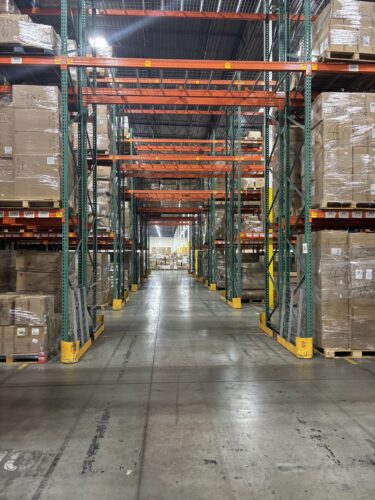
An asset-heavy fulfillment network is fundamentally different. In this model, the logistics provider actually holds the leases, operates the proprietary Warehouse Management System (WMS), and employs the warehouse staff directly.
When a brand leverages physical, owned infrastructure, fulfillment transforms from a chaotic gamble into a precise, scalable manufacturing process. Here is how asset-heavy networks reshape SLA compliance during the most critical days of the year.
1. Dedicated Capacity and Scalable Footprints
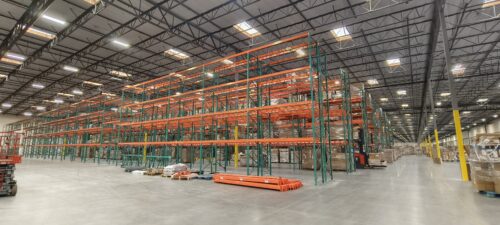
Asset-heavy operators do not scramble for space in November. They engineer their facilities with peak season elasticity in mind. By controlling the physical real estate, these networks can dynamically reconfigure floor plans, expand kitting lines, and dedicate specific operational zones to high-volume brands months before BFCM begins. Your orders are never sidelined because another brand launched a flash sale; the infrastructure is scaled to support your specific forecasts.
2. Standardized Operating Procedures (SOPs) and Core Labor
Instead of throwing untrained temporary labor at a volume spike, asset-heavy networks rely on a robust core of permanent, specialized employees who are deeply familiar with the WMS and your brand’s specific handling requirements.
- Automated Routing: Proprietary software automatically balances order volumes across multiple regional hubs (e.g., routing excess East Coast volume to an under-utilized Midwest facility) to prevent localized gridlock.
- Error-Proofing: Because the staff is trained on standardized hardware (like pick-to-light systems and automated dimensioners), pick-and-pack speeds scale up linearly without a corresponding spike in error rates.
3. Direct Carrier Injection and Tier-1 Routing
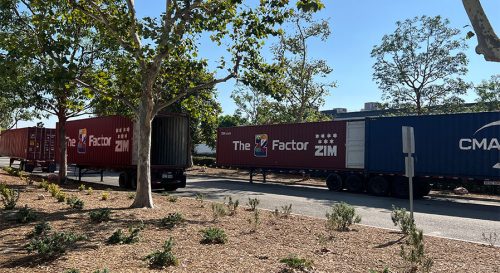
Perhaps the most critical advantage of an asset-heavy network is its leverage over the final mile. Large-scale, self-operated hubs generate enough unified volume to bypass standard, congested carrier sortation centers. Instead of waiting for a FedEx truck to pick up pallets and take them to a local hub that is already days behind, asset-heavy operators utilize zone skipping and direct carrier injection. They build Full Truckloads (FTL) that drive directly to the carrier’s regional destination hubs. This physical bypass mechanism avoids the worst of the BFCM gridlock, ensuring that 2-day and 3-day delivery SLAs are met while competitors’ packages sit idly on origin docks.
Conclusion: Securing the Q4 Promise
During Black Friday and Cyber Monday, your brand’s marketing engine makes a promise to the consumer. Your fulfillment network is the only mechanism capable of keeping it.
Relying on asset-light brokerages and fragmented 3PLs is a structural vulnerability that no amount of customer service can fix. To guarantee SLA compliance, eliminate dock-level gridlock, and turn a chaotic peak season into a flawless brand experience, e-commerce leaders must anchor their operations in hard, self-operated infrastructure. In the high-stakes environment of Q4, owning the physical process is the only way to own the customer relationship.

Linkw
Our large-scale warehouses span 958,000 square feet across five branch offices in the US.
Table of Summary