
-

English
-
Japanese
-
Korean



The playbook for building and scaling a global brand has reached a critical inflection point. For years, ecommerce growth strategies were heavily front-loaded. Boardroom discussions focused almost exclusively on digital arbitrage: hacking ad platform algorithms, optimizing Customer Acquisition Costs (CAC), and aggressive lead-generation funnels to stack up Marketing Qualified Leads (MQLs) and Sales Qualified Leads (SQLs).
But as we navigate the landscape of 2026, that era of easy digital growth has drawn to a close. Ad platform algorithms have largely stabilized, privacy regulations have permanently capped targeting efficiencies, and front-end conversion rates have hit a structural plateau.
Today, international expansion is no longer won or lost at the top of the funnel. The defining variable separating elite global brands from struggling merchants is a back-end metric that has evolved into a core strategic asset: Fulfillment Certainty.
1. Defining Fulfillment Certainty in a Volatile Era
Fulfillment certainty is far more than a basic operational KPI. It is the absolute, data-backed guarantee that a product will move through the global supply chain and land on a consumer’s doorstep precisely when promised—regardless of macroeconomic shocks, port congestion, or seasonal demand spikes.
In a borderless retail market, fulfillment certainty represents the bridge between a brand’s marketing promise and its physical execution. It requires complete transparency, operational elasticity, and direct control over every touchpoint from the manufacturing exit door to the local delivery truck. When you establish absolute certainty on the back end, your supply chain stops behaving like a passive cost center and transforms into a predatory marketing weapon.
2. The Multi-Layered Cost of Logistical Volatility
Many expanding brands operate under the dangerous illusion that logistics is a commoditized service where the cheapest rate sheet wins. This mindset leads directly to a fragmented supply chain built on “black box” logistics providers and asset-light aggregators who pass inventory through an unstable web of anonymous sub-contractors.
When an anomaly inevitably strikes, this fragile structure collapses. The true cost of this volatility is catastrophic, rippling across multiple layers of the business:
- The Smashed Marketing Funnel: You can build the most sophisticated ad creative in the world to capture high-value MQLs, but if your physical inventory is trapped in an unmanaged, bottlenecked port or an outsourced facility, your conversion funnel instantly freezes.
- The Churn Epidemic: Modern consumers do not tolerate delivery friction. A single delayed shipment, a broken delivery promise, or a black-hole tracking page is enough to permanently destroy a customer’s relationship with your brand, tanking your Lifetime Value (LTV) metrics.
- The Capital Efficiency Drain: When your supply chain lacks certainty, you are forced to over-index on safety stock, locking up massive amounts of working capital in stagnant inventory just to buffer against potential delays.
3. Re-Engineering Logistics as a Core Marketing Asset
When fulfillment certainty is locked in, the entire commercial engine gains unprecedented agility. Marketing teams no longer have to run campaigns with their hands tied, constantly fearing that a highly successful product launch or an influencer drop will cause a fulfillment bottleneck.
Instead, guaranteed delivery windows can be pulled forward directly onto the product page as a high-converting psychological trigger. Knowing with absolute certainty that a product can hit a doorstep within 1 to 2 days allows brands to capture premium positioning, command higher margins, and significantly elevate overall Return on Investment (ROI). Logistics ceases to be an expense to be minimized; it becomes a conversion lever that maximizes front-end ad spend.
4. The Structural Fallacy of “Asset-Light” Aggregators
For years, cross-border brands were told that remaining “asset-light” was the golden rule of scaling. The market was flooded with software-only logistics platforms that promised to orchestrate global shipping via dashboards while owning zero physical infrastructure.
By 2026, this model has exposed its fatal flaw: software cannot move physical boxes when a crisis hits.
When a regional hub faces a massive volume surge or a carrier network faces a sudden constraint, software-only middlemen have zero leverage. They are at the mercy of their third-party warehouse partners who are simultaneously trying to balance priorities for hundreds of different clients. To secure true operational certainty, brands must bypass these digital middlemen and align directly with providers who own and control the physical infrastructure.
5. Architectural Agility: The Decentralized, Self-Operated Model
The ultimate engine for generating fulfillment certainty is a highly resilient, multi-node domestic infrastructure. Global brands are actively pulling their inventory out of single, centralized mega-warehouses and distributing it across localized, self-operated networks.
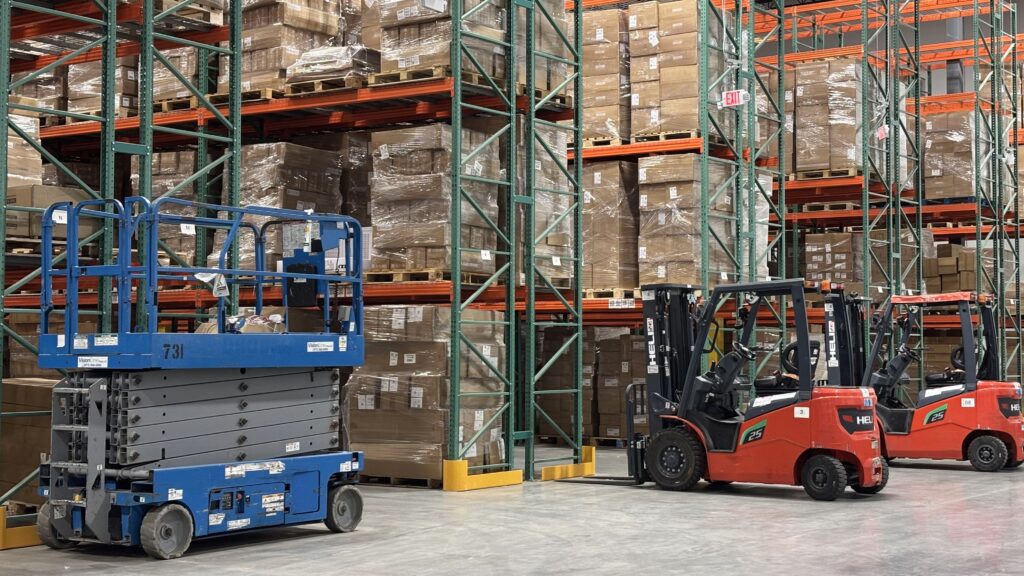
By leveraging LinkW’s robust domestic footprint—deploying inventory across a network of dedicated, self-operated warehouses strategically positioned in core regional gateways like Los Angeles, New York, Dallas, and Savannah—brands can insulate themselves from systemic disruptions.
This architectural approach solves the fulfillment puzzle through three distinct mechanisms:
A. True Proximity to Demand
By staging inventory across the West Coast, East Coast, and Southern corridors, your goods sit closer to the actual clusters of consumer demand. This eliminates the need for expensive, high-risk cross-country transit, converting long-haul shipping lanes into predictable, low-cost local delivery routes.
B. Built-In Network Redundancy
A multi-node network provides an automatic shield against localized operational shocks. If a major port constraint impacts the West Coast gateway in Los Angeles, or a weather anomaly slows down operations in the Northeast, volume can instantly be re-routed through Dallas or Savannah. The consumer-facing delivery promise remains unbroken because the backend network is inherently elastic.
C. Standardized Care and Absolute Control
Unlike outsourced or shared facilities where your premium products are mixed into chaotic, unvetted warehouse spaces, a self-operated infrastructure ensures strict adherence to Standard Operating Procedures (SOPs). From real-time kitting to specialized quality control checks upon arrival, absolute control over the physical environment guarantees that every order is dispatched perfectly, every single time.
As we look toward the remainder of 2026 and beyond, market volatility is no longer a temporary crisis to ride out—it is the baseline reality of international commerce. Brands that continue to treat logistics as a back-office afterthought will see their growth choked out by unpredictable costs and damaged customer relationships.
Fulfillment certainty is the ultimate differentiator. By anchoring your cross-border operations within a hardened, self-operated regional infrastructure, you build a physical moat around your brand. You protect your margins, secure your marketing investments, and ensure that every customer promise made on the screen is flawlessly delivered in the real world.

Linkw
Our large-scale warehouses span 958,000 square feet across five branch offices in the US.
Table of Summary


