
-

English
-
Japanese
-
Korean



For brand operations teams aggressively scaling in North America, tracking Marketing Qualified Leads (MQLs) and Customer Acquisition Costs (CAC) is standard practice. However, an invisible leak often drains overall Return on Investment (ROI): the reverse supply chain.
In recent years, as domestic shipping rates and warehouse processing costs have skyrocketed, a radical trend has taken over the ecommerce landscape: the “returnless refund.” The premise is simple. When a customer initiates a return, the brand issues a full refund but tells the customer to keep the item.
On paper, this sounds like a brilliant operational hack to eliminate reverse freight and warehouse labor. But for Direct-to-Consumer (DTC) brands with a High Average Order Value (AOV), this policy is a dangerous double-edged sword. While it streamlines basic logistics, a blanket “keep it” policy for premium goods introduces severe financial, operational, and reputational risks.
Here is a comprehensive breakdown of the returnless refund dilemma, why it threatens premium margins, and how High-AOV brands can intelligently optimize their reverse supply chain.
1. The Seductive Math of “Keep It” (Where It Actually Works)
To understand why this trend caught on, we must look at the math for low-ticket items. If a brand sells a $12 phone case, the true cost of a traditional return frequently exceeds the value of the product itself.
Consider a standard reverse logistics flow:
- Reverse Freight: $5 to $9 for an inbound shipping label.
- Labor Costs: $3 to $5 in wages for a warehouse worker to receive, open, inspect, and grade the item.
- Refurbishment/Repackaging: $1 to $2 for new polybags or boxes.
When processing costs hit $15 on a $12 item, demanding the product back results in an immediate net-negative cash flow. For high-volume, low-margin brands, the returnless refund acts as a necessary loss-prevention tool.
2. The High-AOV Reality Check: Why Premium Brands Bleed
The equation changes violently when dealing with High-AOV goods—think $150 premium outerwear, $250 specialized electronics, or luxury home decor. For these brands, adopting a returnless refund policy introduces massive operational blind spots.
Unlike a cheap accessory, a $200 jacket retains significant secondary value. Even if the packaging is damaged or the item has a minor cosmetic defect, it can be refurbished, kitted, or offloaded through secondary re-commerce channels to recover 40% to 60% of the baseline cost. A returnless refund completely zeros out this asset recovery, treating premium inventory as disposable.
3. The Psychology of “Friendly Fraud”
Consumers are highly observant and heavily networked. If word spreads on social media, Reddit, or discount forums that a premium brand issues refunds without requiring the physical product back, bad actors will actively exploit the policy.
This leads to a massive spike in “friendly fraud,” which includes:
- Wardrobing: Buying a high-end item to use for a single event (like a photoshoot or party) and immediately requesting a refund while keeping the item.
- Organized Retail Abuse: Syndicates creating multiple accounts to farm premium products for free, only to resell them on platforms like eBay or Poshmark.
By maintaining a lenient returnless policy for high-value goods, you inadvertently train your consumer base to exploit your margins.
4. Brand Dilution and the Loss of Premium Positioning
Exclusivity, quality, and perceived value are the cornerstones of High-AOV brands. The returnless refund sends a subtle but destructive psychological signal to the consumer.
If a brand is willing to simply give away a $200 product to avoid a minor domestic shipping fee, the consumer implicitly learns that the product is cheap to manufacture and holds little intrinsic value. Over time, this erodes brand equity. Premium customers expect a premium return experience—one that feels structured, secure, and respectful of the product’s worth.
5. The Algorithmic Middle Ground: Dynamic RMAs
Instead of a blanket “return everything” or “keep everything” policy, sophisticated operations teams are deploying tech-driven Return Merchandise Authorization (RMA) portals.
By integrating predictive algorithms, brands can make instantaneous, case-by-case decisions at the moment a return is requested:
- Customer Lifetime Value (LTV) Check: Is this a VIP customer who spends $2,000 a year, or a first-time buyer?
- Product Condition: The portal requires the user to upload a photo of the defect before approving a returnless refund.
- Cost-Benefit Routing: If the algorithm detects the item is a highly salable, prime-grade asset, it automatically generates a return label. If the item is heavily damaged, it triggers a returnless refund to save shipping costs.
6. The Physical Fix: Decentralized, Self-Operated Networks
Ultimately, the most profitable High-AOV brands fix the root cause of the reverse logistics crisis: the high cost and slow speed of the physical transit loop. Rather than surrendering expensive inventory, they eliminate long-distance shipping fees.
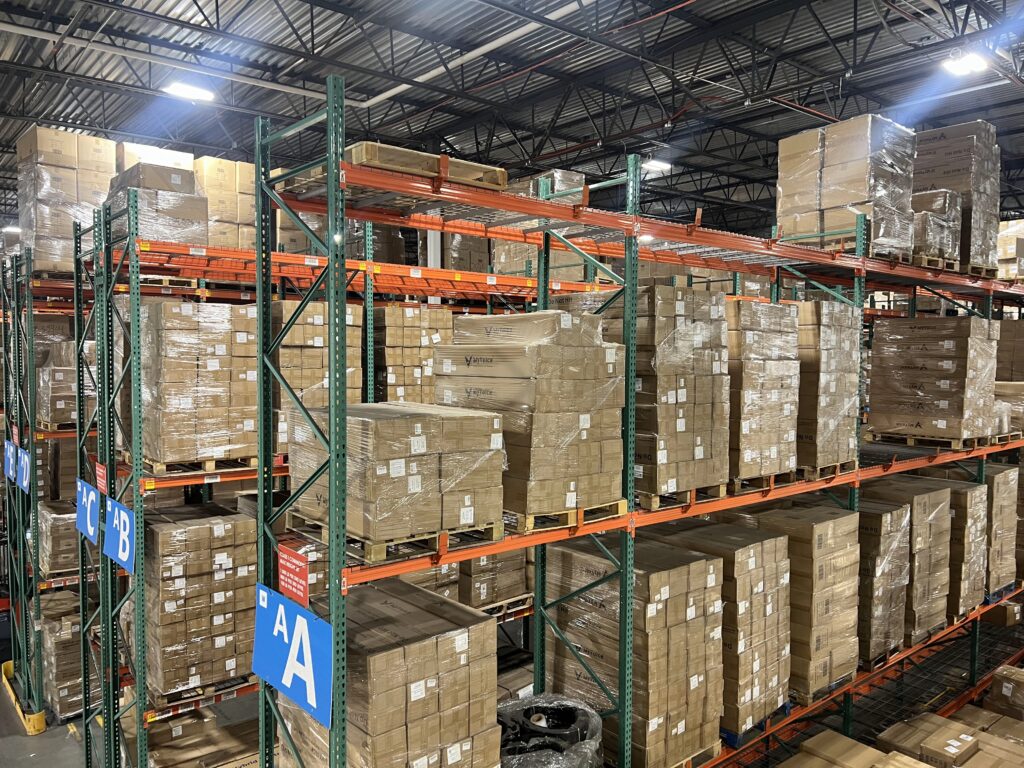
The strategic solution is decoupling from centralized, cross-country fulfillment models and embracing a regionalized footprint. By anchoring domestic supply chains in a robust network of self-operated warehouses, brands can execute a rapid, localized return strategy.
By utilizing LinkW’s expansive infrastructure—deploying approximately 1,089,000 square feet across critical logistics hubs like Los Angeles, New York, Dallas, and Savannah—cross-border and DTC operations can fundamentally alter their return economics.
The Regional Advantage:
- Zone-Skipping Defense: A customer returning a heavy item in New York does not ship it to California. It goes directly to the New York or Savannah self-operated warehouse, drastically slashing freight costs.
- Rapid Grading: Because the item arrives locally in 1–2 days, it is instantly inspected. Prime items are immediately restocked and available for the next local buyer, protecting the product’s seasonal window.
- Controlled Asset Recovery: You retain total physical control of your premium goods, allowing your team to confidently route inventory for restock, refurbishment, or liquidation.
Protect Your Assets
The returnless refund is a blunt instrument. While it works for off-loading cheap inventory, High-AOV brands operating in the competitive North American market must treat their merchandise as highly valuable assets. Protecting your bottom line requires a blend of algorithmic front-end defense and a powerful, decentralized physical network. When your reverse logistics are fast, localized, and intelligent, you never have to give your profit away for free.

Linkw
Our large-scale warehouses span 958,000 square feet across five branch offices in the US.
Table of Summary


