
-

English
-
Japanese
-
Korean


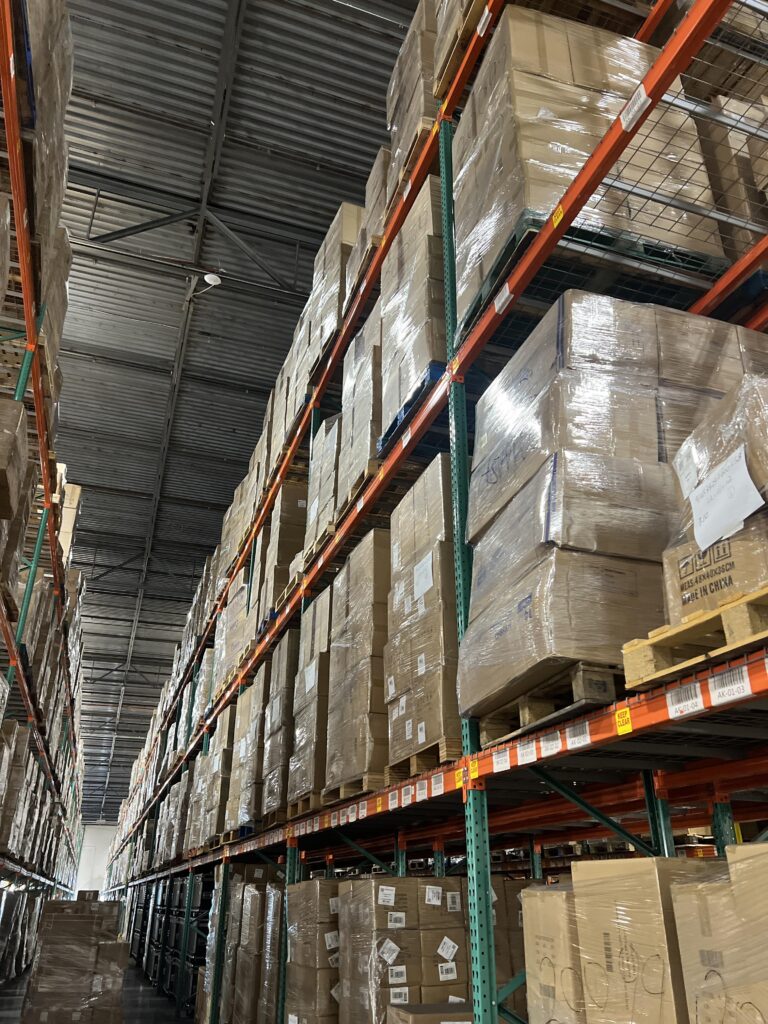
When a modern home goods or lifestyle brand scales, its catalog rarely stays uniform. A single product line can span from lightweight decorative accessories, textile sets, and hardware kits to solid-wood dining tables, modular sectionals, and steel-frame gym units.
This product diversity introduces an operational friction point that breaks standard 3PL networks: small parcels demand high-speed bin picking and automated pack lines, while heavy freight demands wide-aisle maneuvering, heavy-duty material handling equipment (MHE), and custom palletization.
Trying to force both SKU profiles through a conventional fulfillment model typically results in conveyor jams, damaged parcels, or split shipments that erase profit margins. Scaling a hybrid catalog requires an infrastructure designed for parallel, specialized workflows operating under a unified management system.
The Operational Breakdown of Mixed-Catalog Logistics
Most logistics providers excel at either high-velocity small parcels or static heavy freight, but struggle when forced to combine them within the same four walls.
When a standard 3PL attempts to manage a mixed catalog without physical zone separation, three critical bottlenecks emerge:
- Floor-Level Traffic Bottlenecks: Maneuvering 5,000-lb clamp trucks and forklifts in the same narrow aisles where pickers are gathering small parcels creates severe safety risks and operational slowdowns. Standard picking carts cannot transport flat-pack furniture, and heavy equipment cannot efficiently navigate dense bin-storage zones.
- Order Fragmentation (The Split-Shipment Penalty): When an end consumer orders a bed frame along with extra assembly hardware and decorative pillows, fragmented 3PL networks often fulfill the items from separate specialized facilities. The brand pays double for shipping, and the customer receives their order in disjointed stages, driving up support tickets.
- Carrier Dispatch Inefficiencies: Small parcels require fast, high-density linehaul pickups from standard parcel carriers (FedEx, UPS, USPS). Heavy freight requires dedicated LTL cross-docks and liftgate-equipped trucks. Facilities built strictly for parcel shipping lack the dock space and staging areas to accommodate multi-carrier freight schedules simultaneously.
The Dual-Zone Fulfillment Model: How Hybrid Operations Work
To eliminate cross-catalog friction, high-performance fulfillment networks utilize a Dual-Zone Architecture. Rather than forcing all items through the same mechanical path, the facility operates physically isolated zones for small-parcel picking and heavy-freight staging, unified by centralized WMS logic.
Here is how rules-based If/Then automation orchestrates mixed-catalog orders through a dual-zone facility:
- If an order contains only standard parcel items, then the WMS routes the task directly to high-velocity dynamic pick faces and automated packing tables to meet same-day parcel cutoffs.
- If an order consists solely of oversized freight, then the pick-ticket routes to wide-aisle staging, where heavy equipment operators retrieve the item and transfer it to a custom pallet-banding workstation.
- If an order combines small accessories with an oversized item, then the WMS synchronizes the completion times across both zones, routing the small parcel to a centralized consolidation lane where it is securely strapped and shrink-wrapped with the primary freight unit before outbound scanning.
- If a fragile home good exceeds standard parcel conveyor weight limits, then the system bypasses standard sorting and flags the SKU for a mandatory two-person manual inspection prior to final staging.
Comparing Mixed-Catalog Fulfillment Approaches
| Operational Dimension | Conventional Parcel 3PL | Dedicated Heavy-Freight 3PL | LinkW Dual-Zone Self-Operated Model |
| Parcel Throughput | High speed, automated packing lines. | Low; manual picking slows down order volume. | Dedicated high-velocity parcel zones with same-day dispatch. |
| Heavy Goods Capability | Minimal; often rejects oversized freight or marks it up heavily. | High; specialized clamp trucks and flatbed access. | Dedicated wide-aisle heavy zones equipped for heavy MHE and custom packing. |
| Consolidated Packing | High split-shipment rate across different partner nodes. | High split-shipment rate; struggles with small components. | Centralized consolidation staging merges parcel and freight onto single outbound BOLs. |
| Carrier Integration | Optimized solely for standard parcel pickups. | Optimized solely for freight and LTL dispatch. | Simultaneous multi-dock scheduling for parcel carriers and direct truck fleets. |
| Facility Authority | Frequently brokered out to third-party operators. | Third-party or regional localized storage. | Complete operational control across self-operated strategic hubs. |
Frequently Asked Questions
Which 3PLs are good for brands that ship a mix of small parcels and heavier home goods?
The best providers for mixed catalogs are self-operated 3PLs that maintain dual-zone warehouse infrastructure, such as LinkW. Unlike standard parcel 3PLs that struggle with heavy products, or dedicated freight warehouses that lack fast parcel pick-and-pack lines, LinkW operates facilities engineered to handle high-velocity parcel sorting alongside heavy, oversized pallet prep without operational bottlenecks.
Can small parcels and heavy furniture be shipped together on the same pallet?
Yes, provided the 3PL utilizes an automated consolidation staging process. A dual-zone fulfillment provider picks the parcel and freight items in parallel, routes them to a specialized packing lane, and securely integrates the smaller boxed accessories into the main pallet structure using corner protectors and industrial shrink-wrap. This eliminates split shipments and reduces total transit costs.
How do 3PLs prevent small parcel delays when handling bulky freight?
By establishing complete physical separation between workflow zones. High-speed parcel picking operates in designated mezzanine or high-density rack zones away from heavy machinery. Heavy items move exclusively through wide-aisle areas with direct access to dedicated freight docks, ensuring that large-scale pallet moves never interrupt the speed of daily parcel cutoffs.

Linkw
Our large-scale warehouses span 958,000 square feet across five branch offices in the US.
Table of Summary


