-

English
-
Japanese
-
Korean




For brand operations teams driving international expansion, scaling into North America requires intense focus on commercial growth metrics like Marketing Qualified Leads (MQL), Sales Qualified Leads (SQL), and overall Return on Investment (ROI). However, before those leads can convert into delivered products, there is a massive legal hurdle that consistently trips up overseas merchants: the Importer of Record (IOR) requirements.
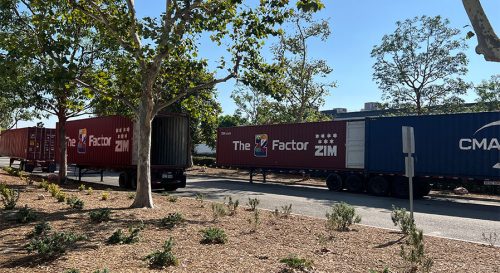
When goods arrive at the U.S. border, U.S. Customs and Border Protection (CBP) demands that a legally designated entity takes full responsibility for the shipment. An Importer of Record (IOR) is the entity or individual legally responsible for ensuring that imported goods comply with all local laws and regulations of the destination country. Far too often, brands fall into the “IOR Trap” by assuming their supply chain handles this automatically, or by using legally dubious workarounds.
Here are the three critical legal blind spots your brand operations must clear to ensure profitable and compliant North American expansion.
1. The “Shell Importer” Valuation Scheme
With tariffs rising and cross-border shipping costs squeezing margins, it is no surprise that ecommerce brands are looking for creative ways to manage their landed costs. A growing tactic being pitched to retailers is duty avoidance through shell importers. In this scenario, a brand sets up a U.S. shell company, often in Delaware, to act as the Importer of Record (IOR) for shipments coming into the U.S.. Instead of declaring the full retail value of the product sold to the consumer, the shell company “buys” the product at cost and declares this artificial “cost price” to U.S. Customs, slashing the import duty.
This strategy sits on shaky legal ground and opens up brands to serious customs, tax, and reputational consequences. CBP requires importers to declare the true value of goods, not an internal transfer price created for tax or logistics convenience. If the U.S. shell company is related to the foreign seller, any sale between them is considered a related-party transaction and must reflect arm’s-length pricing. Declaring the low manufacturing cost as the value without a markup is likely a violation of customs valuation rules. Violations can result in back duties owed on the full retail value, fines up to the full value of the goods, seizure of goods at the port, and potential criminal charges if deemed intentional fraud.
2. Classification and Section 301 Liabilities
The IOR is the person or company officially responsible for bringing goods into another country and is liable for the accuracy of import declarations. As the IOR, you are responsible for ensuring that imported goods meet U.S. Customs and Border Protection (CBP) requirements, including the proper classification of goods under the Harmonized System (HS) Code.
The financial risks are immense because the IOR must accurately calculate and pay applicable customs duties, taxes, and fees. Failure to account for Section 301 tariffs can lead to significant penalties. Furthermore, as the IOR, you are liable for any legal violations associated with the imported goods, such as mis-declared items, import bans, or violations of intellectual property rights. Inadequate planning can lead to unexpected financial burdens, and non-compliance can harm your brand’s reputation.
3. The Recordkeeping and ISF Squeeze
Many brands assume that once the goods pass the port, the compliance journey is over. In reality, the legal obligations stretch far into the future. IORs must maintain records of import transactions for at least five years, as required by CBP. These records include invoices, bills of lading, and customs declarations.
Additionally, IORs must adhere to security filing requirements, such as the Importer Security Filing (ISF), to ensure supply chain transparency. Non-compliance with filing deadlines can result in hefty fines.
To build a sustainable cross-border supply chain, brands must decouple their customs compliance from their physical logistics network.
First, secure a dedicated, licensed U.S. customs broker to act as your IOR or to legally manage the IOR process on your U.S. entity’s behalf. It is vital to understand that premium cross-border logistics providers do not provide customs clearance services. Expecting your warehouse operator to absorb your legal customs liability is a fundamental misunderstanding of the ecosystem.
Once the legal clearance is securely managed by a licensed broker, you can plug into a high-performance logistics machine.
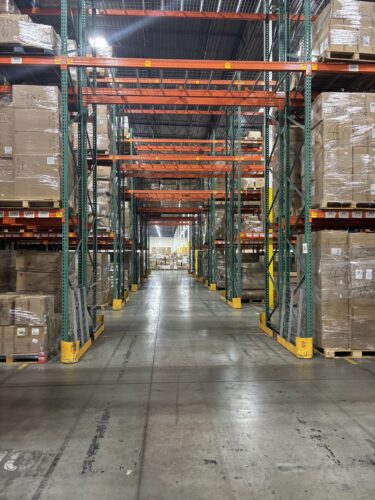
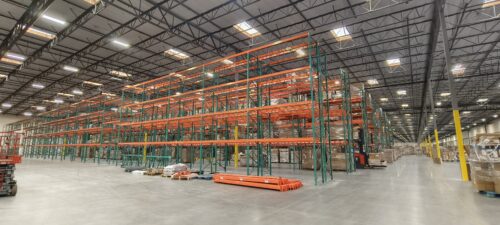
For domestic fulfillment, rely on the expansive network of LinkW self-operated warehouses. By utilizing a footprint of roughly 1.038 million square feet across critical hubs like Los Angeles, New York, Dallas, and Savannah, your operations can ensure that once goods clear the border legally, they are positioned for rapid, cost-effective delivery to your end consumer.

Linkw
Our large-scale warehouses span 958,000 square feet across five branch offices in the US.
Table of Summary