
-

English
-
Japanese
-
Korean



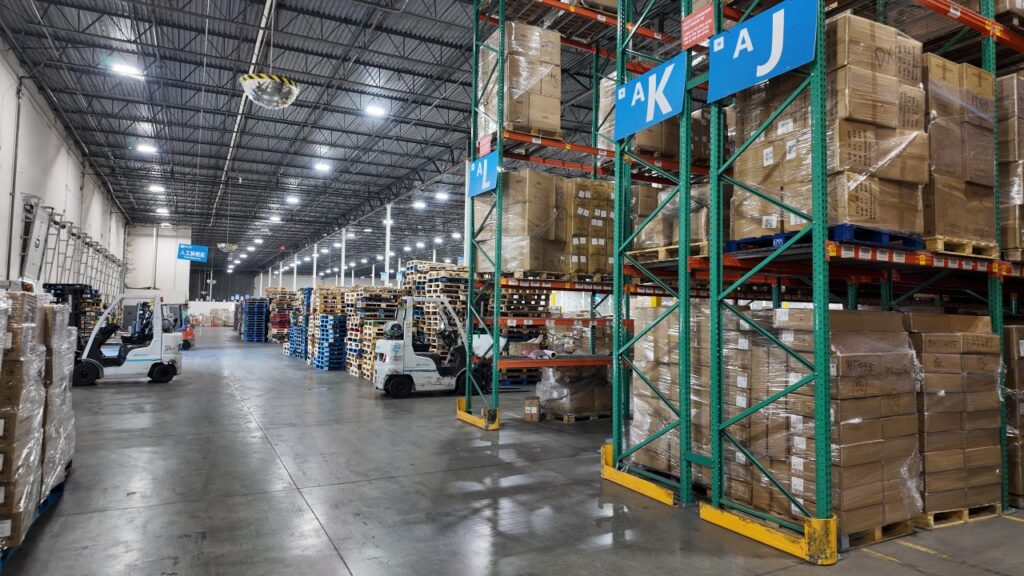
If you’ve ever stepped into a warehouse or distribution center, you’ve likely seen towering shelves filled with neatly stacked pallets, each holding various products ready for shipping. Those towering structures aren’t just for storing goods haphazardly—they’re carefully organized and known as pallet racking. In simple terms, pallet racking is a storage solution that allows businesses to store pallets efficiently, helping maximize space while maintaining easy access to inventory.
Let’s dive into how this system works and why it’s a game-changer for businesses looking to streamline their supply chain operations.
What is Pallet Racking?
At its core, pallet racking is a system of shelves or storage units designed to store pallets (those large, flat platforms that products sit on for easy movement) in a structured way. It’s typically made from steel and comes in various styles to suit different kinds of warehouse needs. These racks allow warehouses to maximize vertical space, store more products efficiently, and create organized aisles for easier access to inventory.
Simply put, pallet racking is like the skeleton of a warehouse. Without it, products would be stacked haphazardly, taking up more space and making it difficult to keep track of inventory.
How Does Pallet Racking Help Businesses?
Meeting Storage Needs and Maximizing Space
Meeting customer delivery expectations is key to growing your revenue and reducing costs. By efficiently organizing your inventory with pallet racking, you can store more products in a smaller space, reducing the need for larger warehouses or renting extra storage.
With the right racking system in place, businesses can stack pallets multiple levels high, making the most of vertical space. This means that warehouses don’t just store inventory in a spread-out, inefficient manner; they’re able to store more goods in a smaller, more optimized area.
Boosting Efficiency in Operations
Another perk of pallet racking is how it helps streamline operations. With a well-organized warehouse, workers can easily navigate through aisles, pick up pallets, and load products for shipment. It helps reduce the time spent looking for inventory, which leads to quicker turnaround times for fulfilling customer orders. The faster you fulfill orders, the happier your customers are.
When your operations run efficiently, you’re able to ship accurately and on time from a reliable fulfillment center. This improves customer satisfaction and can lead to repeat purchases, as customers are likely to return when they see that you can consistently meet their expectations.
Supporting Growth with Flexibility
As businesses grow, the storage needs often change. Pallet racking offers flexibility in adapting to those needs. There are various types of pallet racks designed to handle different kinds of goods, such as drive-in racks, selective racks, or push-back racks. Whether your products are small, large, or need special handling, there’s a racking system that will work for you.
As your inventory grows, pallet racking systems can grow with you. The ability to adjust and reconfigure racks makes it easier to accommodate changes in inventory volume, helping your business scale up without worrying about outgrowing your storage solution. And as your business expands, having the right storage in place allows you to keep fulfillment fast and cost-effective.
Improving Safety and Reducing Damages
Another benefit of pallet racking is the reduction in product damage and injuries. When products are stored on proper racking, they are less likely to be knocked over or mishandled. Additionally, racking systems are designed with safety features such as high-strength steel and proper spacing, which ensures that workers can move through aisles and retrieve inventory without risking accidents.
A well-organized warehouse with secure storage also means that your products are less likely to be damaged during the picking or loading process. Less damage equals fewer returns, which leads to higher profit margins and fewer customer complaints.
Loyal Customers and Repeat Business
When your warehouse is organized, and products are stored efficiently, it directly impacts the customer experience. Meeting delivery expectations helps drive revenue growth and cost reduction, which means that your bottom line grows as well. With other positive factors in place, satisfied customers are more likely to make repeat purchases. Some may even become loyal advocates, promoting your business through positive reviews, personal referrals, and social media engagement.
This loyalty not only boosts topline revenue but also minimizes customer acquisition costs. Once customers trust your business, they’ll keep coming back. And as brand affinity grows, continuing to ship accurately and on time from a reliable fulfillment provider helps promote further loyalty and advocacy.
You may have an easier time kick-starting this cycle with streamlined logistics and fulfillment services, and all of that starts with effective warehouse solutions like pallet racking.
Different types of pallet racks
When it comes to pallet racking, there isn’t a one-size-fits-all solution. Different types of pallet racks are designed to accommodate various types of inventory, storage needs, and warehouse configurations. Each system has its own set of advantages depending on factors like product size, weight, frequency of access, and available space. Let’s take a closer look at the most common types of pallet racks used in warehouses.
1. Selective Pallet Racking
Selective pallet racking is the most common and widely used type of pallet rack system. It’s perfect for warehouses that need easy access to a wide variety of products, as each pallet is stored on its own shelf. Selective racks allow for the most efficient use of space and provide a straightforward, cost-effective solution.
2. Drive-In Pallet Racking
Drive-in pallet racking is a high-density storage solution where forklifts drive directly into the racking system to pick or place pallets. This system is perfect for businesses with large quantities of a single product or similar items. The design minimizes aisle space, maximizing storage density.
3. Push-Back Pallet Racking
Push-back racking allows pallets to be loaded onto rolling carts. When new pallets are added, the ones behind them are pushed back, making room for new inventory. This system uses gravity to move products, so the first pallet loaded is the last one out (FIFO: First In, First Out).
4. Pallet Flow Racking
Pallet flow racking is a dynamic system where pallets are placed on inclined rollers. The system uses gravity to move pallets from the back of the rack to the front. It’s an excellent solution for high-turnover goods where stock needs to be rotated quickly, offering a FIFO approach to product storage.
5. Cantilever Racking
Cantilever racking is ideal for storing long or bulky items such as lumber, pipes, or furniture. Unlike traditional racks, cantilever racks don’t have vertical columns in front, allowing for easy loading and unloading of long materials. The shelves are supported by arms that extend from a central column, making it an ideal solution for items that don’t fit standard pallet racking systems.
6. Double-Deep Pallet Racking
Double-deep pallet racking is similar to selective racking, but it allows you to store two pallets deep in each bay, improving storage density without sacrificing accessibility. To retrieve items from the second pallet, you’ll need a special reach truck that can access both layers.
7. Mezzanine Racking
Mezzanine racking is a multi-level system that effectively adds an extra floor to your warehouse, increasing storage capacity without expanding the building’s footprint. It’s particularly useful for businesses looking to add more storage space or office space within their current facility.
8. Automated Pallet Racking Systems
Automated pallet racking systems use technology like conveyors, robots, or automated guided vehicles (AGVs) to handle inventory movement. This system increases efficiency by reducing human intervention and speeding up order picking, especially in large warehouses with high volumes.
Ready to optimize your pallet storage needs? Contact LinkW Logistics USA for short or long-term pallet storage solutions. Whether you’re looking to streamline your inventory, improve warehouse efficiency, or need flexible storage options, LinkW Logistics USA has you covered. Reach out today to learn more about how we can help you maximize space and manage your goods more effectively.

Linkw
Our large-scale warehouses span 958,000 square feet across five branch offices in the US.
Table of Summary


