
-

English
-
Japanese
-
Korean


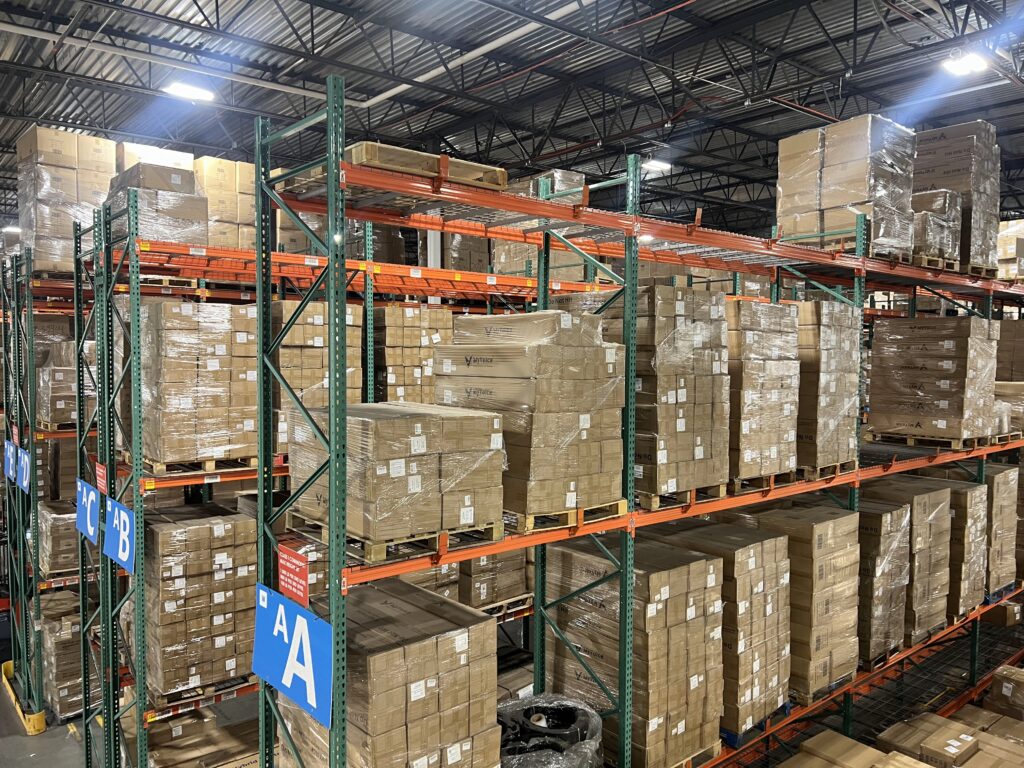
A container lands at the Port of Los Angeles. The duty bill is $180,000. Under standard import procedures, that payment is due within days — before a single unit sells, before the inventory even reaches a shelf.
Now run the same container through a Foreign-Trade Zone. The goods enter the FTZ, duty is deferred, and the $180,000 stays on the company’s balance sheet while inventory sits, gets picked, and sells. For a brand with 60 days of inventory on hand, that is 60 extra days of working capital that would otherwise be locked in a customs payment.
That deferral is the headline benefit. But it is not the only one. FTZ economics also include Merchandise Processing Fee consolidation, inverted tariff relief, and duty elimination on re-exports — a combination that can shift six or seven figures in annual cost depending on import volume and product profile.
The catch is that FTZ activation is not free, and it is not automatic. The savings are real, but the math only works above a certain volume. This guide breaks down what FTZ actually saves, what it costs, and where the break-even sits.
What FTZ Actually Saves, Line by Line
FTZ savings come from four distinct mechanisms. Each one applies differently depending on product type, volume, and sales channel.
1. Duty Deferral: The Cash Flow Lever
Duty deferral does not eliminate the duty. It moves the payment date from the moment goods enter the U.S. to the moment they leave the FTZ for domestic commerce. For inventory-heavy operations, that timing shift is where the real value sits.
The formula is straightforward:
Deferred duty value = (Annual duty liability ÷ Inventory turns) × Cost of capital
A brand paying $2 million in annual duties with four inventory turns defers roughly $500,000 at any given time. At a 10% cost of capital, the annual cash flow benefit is approximately $50,000 — not because the duty disappeared, but because the capital was available for other uses during the holding period.
For ecommerce operations, the impact is magnified. Inventory in a fulfillment center can sit nearly twice as long as inventory in a brick-and-mortar store, which means the deferral window is longer and the working capital benefit is larger.
2. Weekly Entry and MPF Consolidation: The Fee Reducer
Every formal customs entry carries a Merchandise Processing Fee (MPF) — 0.3464% of declared value, with a minimum and a maximum cap per entry. Under standard procedures, every shipment gets its own entry and its own MPF.
Inside an FTZ, weekly entry procedures allow a full week of shipments to be filed under a single customs entry. One entry, one MPF, regardless of how many individual shipments arrived that week. For high-volume importers, the MPF savings alone can exceed $1 million annually.
A simplified example: if a brand receives 25 shipments per week, each triggering an MPF near the cap, the annual MPF bill under standard entry could run into six figures. Under weekly entry, those 25 entries collapse into one, and the MPF savings compound across the year.
3. Inverted Tariff Relief: Pay the Lower Rate
Inverted tariff relief applies when a finished product carries a lower duty rate than its imported components. Under standard entry, the importer pays duty on the component rate. Inside an FTZ, the importer can elect to pay the finished-product rate at withdrawal. For products with a meaningful gap between component and finished-good rates, this is a direct duty reduction, not just a timing shift.
4. Duty Elimination on Re-Exports and Scrap
Goods that leave the FTZ for export, or are destroyed under supervision, do not incur U.S. duty. For brands with international distribution or product lines that generate defective units and scrap, this eliminates a cost category entirely — and avoids the administrative burden of duty drawback claims.
The Cost Side: What FTZ Activation Actually Requires
FTZ benefits are not free. Activation carries fixed and ongoing costs that determine whether the savings justify the program.
| Cost Category | Typical Range |
|---|---|
| FTZ Board application | $5K–$15K |
| Operator agreement | $10K–$50K |
| CBP procedural setup | $5K–$20K |
| Annual operations | $30K–$100K+ |
| Total year-1 | $70K–$200K+ |
These figures come from FTZ consulting benchmarks for SMB importers. The ongoing operational costs include inventory control, recordkeeping, compliance software, and bond costs — not just a one-time application fee.
The decision threshold most consultants use is straightforward: total annual savings must exceed annual operating cost by 2–3x to justify activation. For most operations, that threshold sits at $20M+ in annual import volume.
Below $20M, a third-party FTZ warehouse or bonded warehouse often captures most of the deferral benefit at a lower cost and with far less administrative burden.
The Break-Even Math: When FTZ Makes Sense
The break-even calculation combines the savings mechanisms against the cost base. A simplified decision framework:
| Scenario | Annual Import Volume | Likely FTZ Fit |
|---|---|---|
| Small importer | Under $5M | Bonded warehouse or 3PL FTZ space; activation rarely justifies cost |
| Mid-market | $5M–$20M | Evaluate third-party FTZ warehousing; activation may work if inverted tariffs or re-exports are significant |
| High-volume | $20M+ | Activation typically justified; savings exceed operating costs by 2–3x |
| Export-heavy | Any volume with meaningful re-export share | FTZ duty elimination on exports can justify activation at lower volume |
For brands below the activation threshold, the practical path is third-party FTZ warehousing — using an existing FTZ operator’s zone rather than activating a new site. The brand gets duty deferral and weekly entry access without bearing the full activation and compliance cost.
Where Linkw Fits: Port-Adjacent FTZ Without the Activation Overhead
Linkw operates compliant FTZ warehouses near major U.S. ports and provides FTZ management, inventory control, and duty deferral solutions without requiring brands to activate their own zone.
For importers who want FTZ benefits but fall below the $20M activation threshold, Linkw’s model is designed for exactly that gap:
- Port-adjacent FTZ space: Goods move from container to FTZ warehouse with 48-hour container unloading at major U.S. ports, keeping the deferral clock running from the moment of arrival.
- FTZ operator and administrator functions: Linkw handles the operator role, inventory control, software setup, and regulatory compliance — the operational layer that makes FTZ activation expensive for individual brands.
- AI-driven FTZ compliance tracking: Real-time inventory tracking and compliance reporting feed data to the brand’s designated broker. For brands managing complex inbound flows, this pairs with our approach to real-time stock visibility across multiple warehouses.
- In-zone manipulation: Assembly, labeling, and quality inspection inside the FTZ mean goods can be prepared for sale before duty is triggered. This is especially useful for brands importing from multiple origins, as detailed in our guide on unifying inventory from multiple manufacturing locations.
- Integration with port drayage and nationwide trucking: An in-house fleet of 50+ port trailers and 35 interstate trucks moves goods from port to FTZ to customer without a handoff gap.
The result is FTZ economics without the $70K–$200K year-one activation cost and the ongoing compliance burden of running a zone independently.
FAQ
How much can FTZ actually save on duties?
FTZ savings come from four sources: duty deferral (cash flow value of paying later), MPF consolidation (one weekly entry instead of per-shipment entries), inverted tariff relief (paying the finished-good rate instead of the component rate), and duty elimination on re-exports. For high-volume importers, MPF savings alone can exceed $1 million annually.
What is the minimum import volume for FTZ activation?
Most consultants place the activation threshold at $20M+ in annual import volume. Below that, a third-party FTZ warehouse or bonded warehouse typically captures most of the deferral benefit at lower cost and with less administrative overhead.
How does duty deferral affect cash flow?
Duty deferral keeps duty payments on the balance sheet longer. The value is the deferred duty amount multiplied by the cost of capital for the holding period. A brand with $2M in annual duties and four inventory turns defers roughly $500K at any given time; at 10% cost of capital, that is about $50K in annual cash flow benefit.
What is the difference between an FTZ and a bonded warehouse?
Both defer duty, but they differ in flexibility and duration. A bonded warehouse allows storage for up to five years, with limited processing. An FTZ has no time limit, allows broader manipulation (assembly, labeling, testing), and supports weekly entry consolidation and inverted tariff relief. For ecommerce brands with ongoing import volume, FTZ is generally the more flexible option.
Can a brand use FTZ benefits without activating its own zone?
Yes. Third-party FTZ operators — including 3PLs with FTZ warehouse space — allow brands to access duty deferral and weekly entry without bearing the full activation cost. Linkw provides FTZ warehousing and management near major U.S. ports for brands that fall below the independent activation threshold.
Bottom Line
FTZ savings are not theoretical. Duty deferral, MPF consolidation, inverted tariff relief, and re-export duty elimination are real mechanisms with calculable value. But they come with activation costs and compliance requirements that only make sense above a certain volume.
Run the math before you run the paperwork. If your annual import volume is above $20M, activation likely pays for itself within the first year. If it is below that threshold, third-party FTZ warehousing — through an operator like Linkw with port-adjacent FTZ space, FTZ management, and integrated drayage and trucking — captures the deferral benefit without the activation overhead.

Jay
Jay is a freelance writer covering U.S. logistics, warehousing, and supply chain trends. With a passion for making complex B2B topics accessible, he helps readers navigate the evolving world of fulfillment. A dedicated sports fan, he spends his free time analyzing game strategies—much like he analyzes supply chain networks.
Table of Summary


