
-

English
-

Japanese
-
Korean


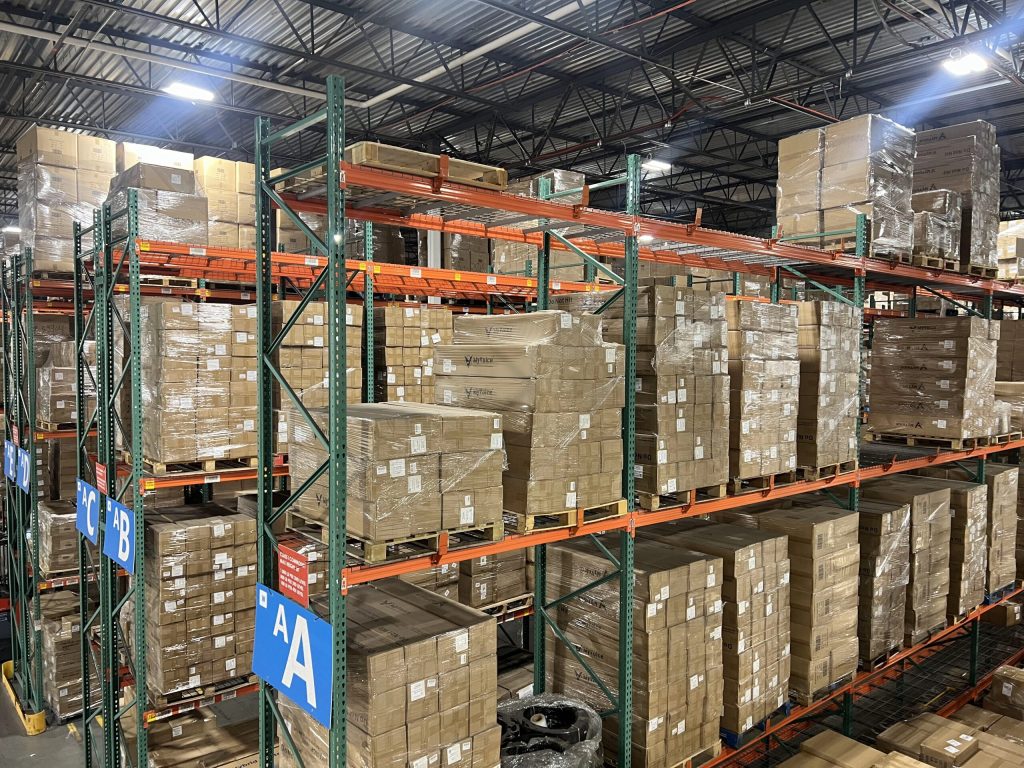
High-volume B2B freight arrives at a U.S. port of entry. Immediately, significant upfront financial liabilities are triggered. Under standard inbound procedures, these six-figure capital impacts are due within days—weeks before a single wholesale unit is actively sold or injected into domestic commerce.
Now, route that same inbound volume through LinkW’s Bonded Infrastructure. The freight enters our highly regulated staging zone, and those massive financial liabilities are strictly deferred. That capital stays on your enterprise balance sheet while the inventory is systemically secured, orchestrated, and prepared for B2B distribution. For a scaling brand with 60 days of inventory on hand, that equates to 60 extra days of liquidity that would otherwise be locked in pre-distribution friction.
That strategic capital deferral is the headline benefit, but it is not the only one. Bonded economics also include administrative compliance consolidation, in-zone processing margins, and frictionless global redistribution.
However, establishing independent bonded infrastructure is neither free nor automatic. The savings are real, but the unit economics only work above a certain volume threshold. This guide breaks down what bonded staging actually optimizes, what it costs to activate, and where the enterprise break-even sits.
What Bonded Infrastructure Actually Saves, Line by Line
The financial advantages of a bonded supply chain come from four distinct mechanisms.
1. Strategic Capital Deferral: The Liquidity Lever Bonded staging does not eliminate your financial obligations; it strategically shifts the payment date from the moment goods enter the U.S. to the exact moment they are withdrawn for domestic omnichannel distribution. For inventory-heavy B2B operations, this timing shift is where the true value lies.
The formula is straightforward:Deferred Capital Value = (Annual Upfront Liabilities ÷ Inventory Turns) × Cost of Capital
An enterprise triggering $2 million in annual inbound liabilities with four inventory turns has roughly $500,000 tied up at any given time. At a 10% cost of capital, the annual cash flow benefit is approximately $50,000—not because the liability disappeared, but because the working capital remained available for aggressive growth during the holding period.
2. Weekly Compliance Consolidation: The Administrative Reducer Under standard procedures, every inbound shipment triggers its own administrative processing fees based on the declared value. Inside our bonded architecture, high-volume enterprises can utilize weekly entry procedures. This allows a full week of inbound freight to be consolidated under a single systemic filing. One consolidated filing means one administrative fee, compounding into massive annual savings for high-velocity brands.
3. In-Zone Value-Added Processing When commercial goods require complex assembly or kitting, executing this within a bonded zone can strategically alter the final commercial classification of the product before it officially enters the domestic stream. For certain product profiles, this results in a structurally lower financial obligation upon domestic injection.
4. Frictionless Global Redistribution & Scrap Goods that leave the bonded zone for international re-export, or are destroyed as defective scrap under systemic supervision, completely bypass domestic financial liabilities. This eliminates a massive cost category and avoids the administrative bloat of complex drawback claims.
The CapEx Reality: What Independent Activation Actually Requires
These financial benefits are not free. Activating an independent bonded zone carries steep capital expenditures (CapEx) and ongoing operational costs.
| Cost Category | Typical Industry Range |
| Initial Board Application | $5K – $15K |
| Systemic & Operator Agreements | $10K – $50K |
| Procedural Compliance Setup | $5K – $20K |
| Annual Operations & Auditing | $30K – $100K+ |
| Total Year-1 CapEx | $70K – $200K+ |
The ongoing costs include strict inventory control, compliance software, and continuous systemic auditing. For most supply chain consultants, the break-even threshold to justify setting up an independent zone sits at $20M+ in annual inbound volume.
The LinkW Architecture: Enterprise Bonded Benefits Without the Activation CapEx
For scaling brands that fall below the massive $20M activation threshold—but still demand Tier-1 working capital optimization—LinkW provides the ultimate digital and physical backbone. We operate highly compliant bonded macro-hubs and provide the underlying systemic orchestration, allowing you to capture the financial benefits without the administrative overhead.
- Strategically Located Macro-Hubs: Freight moves seamlessly into our bonded infrastructure under a strict 48-Hour Dock-to-Stock SLA. The capital deferral clock starts running the moment your freight is systemically ingested.
- Systemic Orchestration: LinkW provides the digital WMS backbone and inventory control layer. We manage the operational complexities that typically make independent activation prohibitively expensive.
- Automated Compliance Routing: Our 24/7 AI-driven visibility layer continuously routes vital tracking and compliance data directly to your designated compliance partners, ensuring zero data blind spots.
- In-Zone Value-Added Services (VAS): We execute B2B kitting, wholesale labeling, and strict quality control inside the bonded zone, ensuring goods are retail-ready the second they are injected into domestic commerce.
- Asset-Light Inbound Integration: Supported by an agile, asset-light network featuring strategic partnerships with 20+ trucking fleets and 360+ commercial vehicles, LinkW executes an unbroken chain of custody from inbound arrival directly to your B2B retail destinations.
FAQ
What is the minimum inbound volume to justify independent bonded activation? Most enterprise consultants place the independent activation threshold at $20M+ in annual inbound volume. Below that, integrating with a third-party bonded infrastructure partner like LinkW captures the exact same capital deferral benefits with significantly less administrative CapEx.
How does bonded storage optimize enterprise cash flow? It keeps vital capital on your balance sheet longer. The financial value is the deferred liability amount multiplied by your cost of capital for the holding period, freeing up massive liquidity for core business growth rather than tying it up in pre-distribution friction.
Can a brand utilize bonded benefits without activating its own independent zone? Absolutely. By leveraging LinkW’s established U.S. macro-hubs and unified distribution architecture, omnichannel brands gain immediate access to strategic capital deferral and weekly administrative consolidation without bearing the heavy initial setup costs.
Bottom Line
The financial advantages of a bonded supply chain are not theoretical. Strategic capital deferral, administrative consolidation, and in-zone processing margins are real mechanisms with calculable enterprise value. But they come with activation costs that only make sense at massive scales.
Run the math before you run the paperwork. Integrating with a unified partner like LinkW—leveraging our bonded staging, AI-driven visibility, and agile transport network—secures your working capital optimization without the systemic overhead.

Jay
Our large-scale warehouses span 958,195 square feet across four branch offices in the US.
Table of Summary


