-

English
-
Japanese
-
Korean



Understanding the tax implications is one of the important factors to consider when expanding your e-commerce business into the lucrative markets of the European Union countries. Unlike doing business in China or the U.S., entering the EU requires careful consideration of its tax system, especially value-added tax (VAT).
This strategic step will not only help you navigate the complexities of EU taxation, but also enable your business to successfully grow and integrate into the European market.
What is a VAT number?
A VAT number, or Value Added Tax number, is a unique identifier assigned to businesses that are registered to collect and remit VAT within a particular country or region. VAT is a consumption tax placed on goods and services at each stage of production or distribution, and the VAT number ensures that businesses comply with tax regulations.
The UK VAT number typically starts with the prefix "GB," followed by nine digits (e.g., GB123456789). In some cases, it may include additional characters for branches or divisions of a business.
Businesses in the UK must register for VAT if their taxable turnover exceeds the VAT registration threshold, which is subject to change, so it's important to check the current threshold with HM Revenue and Customs (HMRC). Once registered, businesses must display their VAT number on invoices and other relevant documents.
Of course, in addition to the standard VAT rate to be applied to most products, there are some categories of goods that can benefit from a reduced or zero rate:
- Food and Drink
- Children's Clothing and Footwear
- Books and Newspapers
Therefore, please carefully understand the tax rate of the product in question.
How to obtain a VAT number
To obtain a VAT number in the United Kingdom, you need to register for VAT with HM Revenue and Customs (HMRC).
1. Determine if You Need to Register: You must register for VAT if your business’s taxable turnover exceeds the VAT registration threshold (which can change annually, so check the current threshold on the HMRC website). You can also register voluntarily if your turnover is below the threshold.
2. Prepare Required Information: Before you start the registration process, gather necessary information, including:
- Your business details (name, address, and contact information).
- Details about your business activities.
- Bank account details.
- Information about any associated businesses within the last two years.
3. Register Online: Most businesses can register for VAT online through the HMRC website. You’ll need to create a Government Gateway account if you don’t already have one.
4. Complete the Registration: Fill out the online VAT registration form with your business details. If your business is a partnership or you’re joining the VAT group, you may need to fill out additional forms.
5. Receive Your VAT Number: Once your application is processed, HMRC will send you a VAT registration certificate. This document will include your VAT number, the date of registration, and your VAT return deadlines.
6. Start Charging VAT: Once you have your VAT number, you can start charging VAT on your taxable goods and services and issue VAT invoices to your customers.
7. Submit VAT Returns: After registration, you’ll need to submit regular VAT returns, usually quarterly, and pay any VAT due to HMRC.
The impact of Brexit on VAT regulations
From January 1, 2021, businesses in Great Britain will treat EU countries like any other country outside the EU when importing and exporting.
VAT on imports of £135 and under The UK has introduced additional measures for overseas goods arriving in Great Britain from outside the UK. VAT on imports with a consignment value of £135 or less applies at the point of sale rather than as import VAT at customs.
For business-to-customer (B2C) transactions: UK VAT will be charged by the seller; therefore, in principle, the seller must be registered for VAT in the UK. For example: a French business sells a table priced at £120 (currency equivalent) to a customer in the UK who pays £120 including VAT. The French business seller must register for UK VAT and pay 20% VAT on the sale in its next VAT return.
For business-to-business (B2B) transactions: the VAT will be reversed to the customer and the VAT will be claimed on their next VAT return. The recipient business should ensure that the seller is aware of its VAT number, otherwise the seller has no choice but to treat it as a B2C sale and apply the VAT. e.g. A French business sells the same table to a UK business and the UK business pays £120 including VAT. The UK customer declares VAT on their next return, but if the UK buyer fails to notify the French seller of their VAT number, the French seller must treat the sale as B2C and pay 20% VAT to HMRC on their next VAT return. Online trading platforms (OMPs) that are involved in facilitating sales are now responsible for collecting and accounting for VAT, subject to certain conditions being met.
Imported goods with VAT over £135 are subject to VAT at the point of importation, but the UK government has introduced ared VAT payment system to avoid businesses facing cash flow problems. The system allows businesses importing goods into the UK to account for VAT on their next VAT return, meaning that goods can be released from Customs and Excise using a C79 VAT certificate without paying VAT. Import VAT applies when the goods enter into free circulation, which should be considered the point at which VAT is payable. This may be at the port of entry or, if special customs procedures are used, when the goods are released from the customs warehouse. Businesses will need to collect evidence for HMRC about the point of entry of goods into free circulation for VAT recording purposes. VAT can be paid at the point of taxation, but most businesses are likely to use ared VAT accounting system. This is optional for businesses but must be used if there is a delay in submitting a customs declaration.
UK VAT number FAQs
How do I apply for a UK VAT number?
You can apply for a VAT number online through the HM Revenue and Customs (HMRC) website. The application requires information about your business, such as turnover, business activities, and bank details.
Can I verify a UK VAT number?
Yes, you can verify a UK VAT number using the EU’s VIES system or by contacting HMRC directly to ensure it is valid and correctly registered.
What happens if I don't register for VAT when required?
Failing to register for VAT when required can result in penalties and interest charges. It is important to register promptly if your business exceeds the VAT threshold.
Can I reclaim VAT on purchases before registration?
Yes, you can reclaim VAT on goods purchased up to four years before registration and services up to six months before registration, provided they are related to your business.
Do I need to display my VAT number?
Yes, your VAT number must be displayed on all VAT invoices issued to customers and on certain business documents, such as your website and correspondence.

Linkw
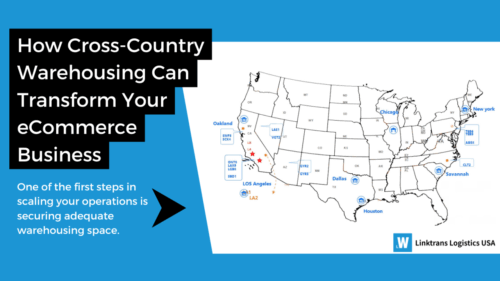
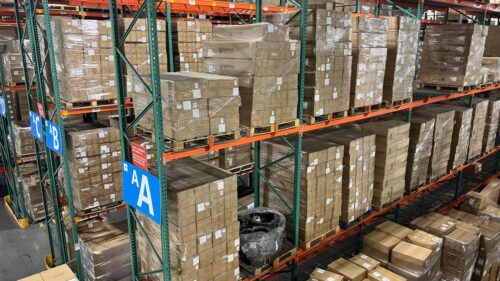
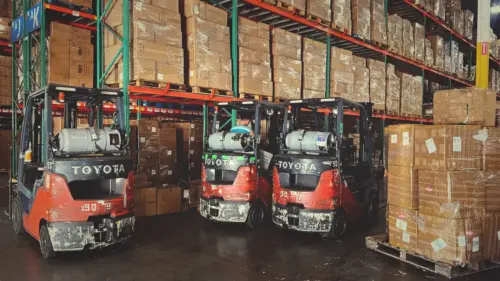
Our large-scale warehouses span 800,000 square feet across seven branch offices in the U.S.A., and the U.K.
Table of Summary