-

English
-
Japanese
-
Korean



The transportation industry is poised for a transformative year in 2025 as it emerges from a prolonged freight recession, grapples with evolving regulatory landscapes, and accelerates the adoption of new technologies. After years of volatility caused by the COVID-19 pandemic, supply chain disruptions, and economic uncertainty, the freight and logistics sectors are cautiously optimistic about recovery. However, challenges such as overcapacity, regulatory pressures, and technological adaptation will shape the industry's trajectory in the coming year.
Here’s a detailed forecast of what lies ahead for the trucking, ocean shipping, and freight industries in 2025, based on market trends, regulatory developments, and expert insights.
Freight Market Recovery: A Slow but Steady Climb
The trucking industry is finally emerging from a two-year freight recession triggered by falling freight volumes and plummeting rates in 2022. While demand is on the rise and rates appear to have bottomed out, the recovery will be gradual. Industry leaders predict a largely flat market in the first half of 2025, with signs of growth in the latter half of the year.
Several factors are contributing to this slow recovery. Overcapacity remains a major issue as the pandemic's freight boom led to an influx of new carriers, many of which are now struggling to survive in a post-recession market. Small carriers, which make up over 95% of the trucking industry and often operate fewer than 10 trucks, are particularly vulnerable due to limited financial safety nets.
Despite these challenges, carriers have an opportunity to position themselves for long-term growth by investing in efficiency and technology. Strategic decisions made now will have lasting implications as the industry stabilizes.
Regulatory Changes: Balancing Federal and State Pressures
The regulatory landscape in 2025 will be shaped by both federal and state-level changes, with significant implications for carriers and brokers. The Biden administration’s Fall 2024 Unified Agenda outlined several key rulemakings set to impact the freight market, including new safety fitness procedures, fuel efficiency standards for heavy-duty vehicles, and updated guidelines for workplace drug testing. These regulations aim to improve safety, sustainability, and operational transparency across the industry.
However, the incoming Trump administration, set to take office in January 2025, has vowed to roll back several federal regulations. This includes potential delays or reversals of EPA emissions rules slated for 2027, which would require widespread adoption of electric trucks. While such rollbacks could ease cost pressures on carriers, state-level regulations, particularly in California, are expected to remain stringent. The California Air Resources Board (CARB) continues to lead the charge on emissions standards, creating a patchwork of compliance requirements for carriers operating across state lines.
Innovation and Technology: A New Era for Freight
The transportation industry is undergoing a digital transformation, driven by advancements in artificial intelligence (AI), automation, and autonomous vehicle technology. In 2025, carriers and brokers are expected to double down on technology adoption to streamline operations, reduce costs, and improve efficiency.
- AI and Automation: AI-powered tools are becoming increasingly sophisticated, offering solutions for fleet management, driver safety, and operational planning. Carriers are leveraging AI to automate back-office tasks, optimize routes, and analyze data for strategic decision-making. Brokers, meanwhile, are exploring AI-driven lead generation and fraud detection tools, though adoption remains uneven.
- Autonomous Trucks: Autonomous trucking technology is entering a new era, with several companies testing self-driving trucks on dedicated routes. While widespread adoption is still years away, 2025 will see significant progress in regulatory approvals and pilot programs. Autonomous trucking is expected to create a new class of freight, offering opportunities for carriers to reduce costs and address driver shortages.
- Digital Platforms: Unified software platforms are becoming essential for managing distributed teams and streamlining communication. These platforms enable carriers to integrate dispatch, load management, and accounting processes, improving visibility and reducing inefficiencies. Smaller carriers, in particular, are expected to benefit from the accessibility and affordability of cloud-based solutions.
Sustainability and Efficiency: A Dual Mandate
Sustainability will continue to be a top priority for the transportation industry in 2025, driven by regulatory requirements and customer expectations. Carriers are exploring strategies to reduce emissions and improve efficiency, such as:
- Route Optimization: Advanced routing technologies can reduce mileage by up to 30%, cutting fuel costs and emissions. This is particularly important in an industry where 20-35% of trucking miles are driven empty.
- Freight Pooling: Collaborative shipping models are gaining traction as a way to maximize truck capacity and minimize waste.
- Alternative Fuels: While electric vehicles face significant cost and infrastructure challenges, carriers are exploring other fuel-efficient technologies to meet emissions standards without compromising profitability.
Efficiency will also be a core focus as carriers navigate narrow margins and rising costs. By adopting digital tools and optimizing operations, carriers can become leaner and more resilient in the face of economic uncertainty.
Trade and Tariffs: Navigating Global Challenges
International trade policies will play a critical role in shaping the transportation industry in 2025. President-elect Donald Trump has announced plans to impose new tariffs on goods from Mexico, Canada, and China, citing concerns over illegal immigration and drug trafficking. These tariffs, including a proposed 25% tax on imports from Mexico and Canada, could disrupt supply chains and increase costs for carriers and consumers alike.
The proposed tariffs have already sparked backlash from trading partners, with Mexico and Canada warning of retaliatory measures. Industry analysts predict that such policies could stymie economic growth, raise goods prices, and exacerbate inflationary pressures. For the transportation industry, higher tariffs could lead to reduced freight volumes and increased operational complexity.
Preparing for the Road Ahead
The transportation industry in 2025 will be defined by its ability to adapt to a rapidly changing environment. While the freight market is showing signs of recovery, carriers and brokers must navigate a complex landscape of regulatory changes, technological advancements, and geopolitical challenges.
By prioritizing efficiency, embracing innovation, and staying ahead of regulatory developments, industry leaders can position themselves for success in the years to come. The road to recovery may be long, but with strategic investments and a forward-looking approach, the transportation industry is well-equipped to meet the challenges of 2025 and beyond.

Linkw
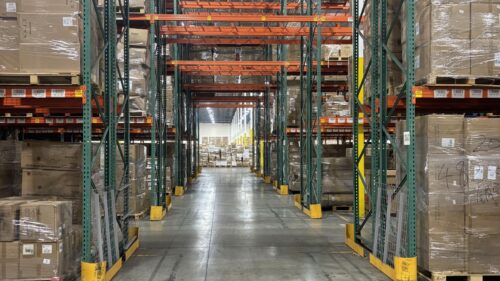
Our large-scale warehouses span 800,000 square feet across seven branch offices in the U.S.A., and the U.K.
Table of Summary