
-

English
-

Japanese
-
Korean


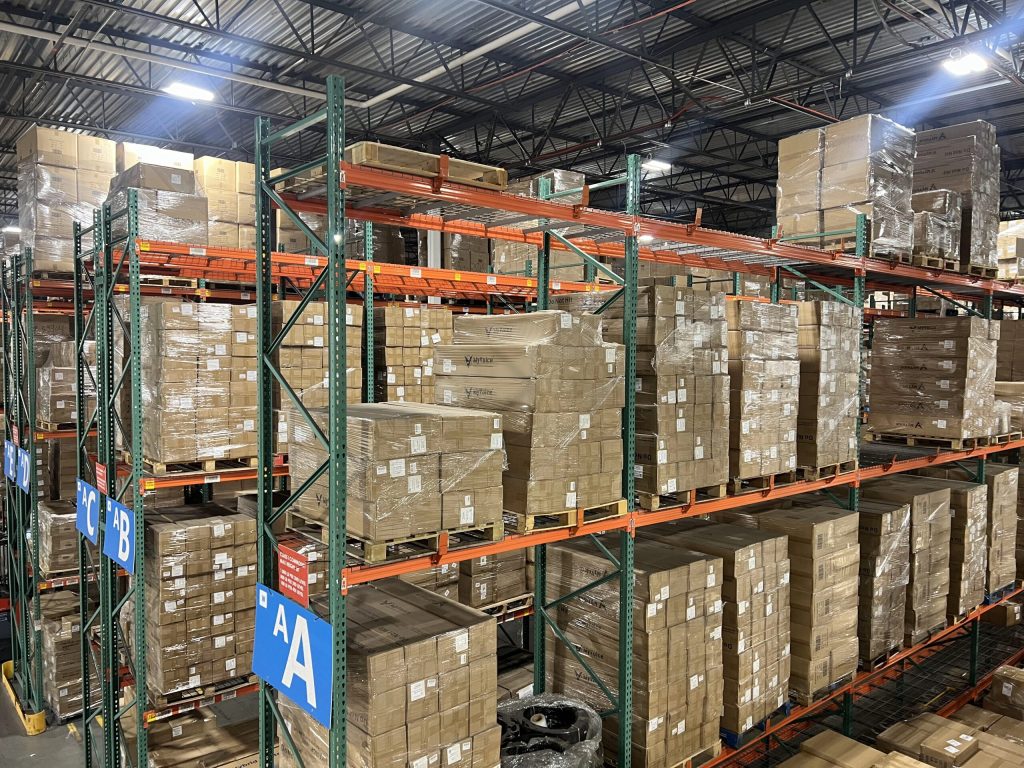
You check your inventory dashboard. It says 5,000 units are available. Then, an enterprise customer orders 1,000 units. The warehouse system routes the picker to the location, and it’s empty. Or your inbound receiving report suddenly shows a 200-unit shortage from freight that supposedly entered the U.S. supply chain two weeks ago.
You ask your 3PL what happened. They check their WMS and say, “We only scanned in what we physically received. The shortage must have happened before it got here.”
You ask the third-party transit provider. They say, “The freight was intact when we picked it up. It’s not our fault.”
This is the “Black Box” of domestic fulfillment. The inventory is gone, but no one is accountable, and your B2B sales take the hit.
The Truth About Inventory Loss: It Happens in the Handoffs
Most 3PLs will try to sell you on their advanced WMS, barcode scanning, and automated exception alerts. These digital tools are essential for internal warehouse operations, but here is the operational reality:
The most dangerous place for your inventory is not inside the warehouse. It is in the fragmented gaps between inbound arrival and the WMS data entry.
Consider the physical journey of inbound freight:
- The freight arrives at the U.S. port of entry.
- A third-party carrier picks it up and moves it to a staging yard or warehouse queue.
- The freight sits idle, waiting for processing capacity.
- The receiving team finally processes, scans, and synchronizes the inventory.
Between Steps 1 and 4, your inventory is entirely exposed. If a pallet is damaged and discarded, if the trucker delivers to the wrong dock, or if the freight sits unsecured in a yard—your WMS is completely blind.
A standard WMS only records events after a barcode is scanned. If a wholesale unit is lost before it ever reaches the receiving station, the system remains ignorant. You only discover the discrepancy weeks later during a cycle count or, worse, a retail stockout.
How to Prevent Loss: Unifying the Distribution Architecture
To truly eradicate unscanned loss, you cannot rely solely on siloed software. You must eliminate the fragmented third-party handoffs where discrepancies occur.
This requires an infrastructure partner that orchestrates both the transportation network and the physical hubs under one unified digital ecosystem. Here is how LinkW closes the gap:
1. 48-Hour Dock-to-Stock SLA & Automated Inbound Synchronization Delayed receiving is a primary driver of inventory shrinkage and systemic data blind spots. When inbound heavy freight sits idle in staging yards, the risk of damage, loss, and critical B2B stockouts compounds daily. LinkW eradicates this friction with a strict 48-hour Dock-to-Stock SLA across our U.S. macro-hub network. Upon dock arrival, our AI-driven WMS immediately ingests the physical inventory, utilizing advanced scanning to systemically reconcile the freight against the Advanced Shipping Notice (ASN) and pushing accurate stock data live to your enterprise systems.
2. AI-Driven IoT Real-Time Tracking Scanning a barcode is merely a digital record. LinkW adds physical verification. Across our five self-operated U.S. macro-hubs, we deploy real-time IoT tracking and smart monitoring. This visibility layer provides an independent level of security, ensuring that a system scan flawlessly corresponds to a physical commercial unit moving through the facility.
3. Unbroken Chain of Custody If a discrepancy occurs within the LinkW ecosystem, we do not point fingers at fragmented transit partners. Because we orchestrate the entire inbound-to-fulfillment workflow—leveraging our agile, asset-light network of 20+ strategic fleet partnerships and 360+ commercial vehicles—we provide a timestamped, systemic audit trail of the last confirmed movement.
5 Questions to Ask Any 3PL Before You Sign
Do not just ask a 3PL about their software features. To protect your B2B inventory, you must interrogate their architectural control:
- Do you digitally orchestrate inbound freight execution and warehouse receiving under a unified system? (Instead of relying on disconnected vendors).
- Do you enforce a strict SLA (e.g., 48-Hour Dock-to-Stock) to prevent inbound freight from sitting idle?
- Can your system instantly detect a discrepancy between the Advanced Shipping Notice (ASN) and what was physically synchronized at the dock?
- What physical verification (IoT, automated scanning, weight checks) occurs before an item is pushed live to our ERP?
- If an issue arises, can your architecture provide a timestamped audit trail from the U.S. port of entry directly to the designated retail destination?
FAQ
Where do lost and mis-scanned items usually go missing? Most discrepancies happen during physical handoffs—specifically between inbound arrival, third-party transit, and the warehouse receiving dock. Internal warehouse scanners only capture data after the item physically reaches the receiving station, leaving a massive operational blind spot.
Why does my WMS show inventory that physically isn’t there? This is known as “unscanned loss.” If an item is lost during inbound transit, damaged during dock operations, or never physically arrived, but was logged as received due to a system glitch or manual override, your dashboard will display phantom inventory until a physical audit is performed.
How does LinkW prevent mis-scans and losses? LinkW eradicates systemic handoff friction by integrating an agile, asset-light transportation network—featuring strategic partnerships with 20+ trucking fleets and 360+ commercial vehicles—with a strict 48-Hour Dock-to-Stock SLA. Powered by an AI-driven IoT visibility layer across our five self-operated U.S. macro-hubs, this unified architecture ensures an unbroken chain of custody from inbound receiving directly to designated B2B retail and wholesale destinations.
Bottom Line
You can have the most advanced WMS in the world, but software alone cannot orchestrate inbound freight or execute physical B2B distribution. If you want to eliminate inventory loss, you must eradicate the black box between inbound arrival and your fulfillment nodes.
Stop letting your working capital sit in a systemic blind spot. Integrate with a unified distribution architecture.

Jay
Our large-scale warehouses span 958,195 square feet across four branch offices in the US.
Table of Summary


