-

English
-
Japanese
-
Korean




Shipping costs aren’t just about how heavy your package is—they also depend on how much space it takes up. Enter dimensional weight (DIM weight), a pricing method used by carriers to charge for packages that are big but light.
Imagine shipping a giant box with a fluffy item inside—it might only weigh a few pounds, but it still takes up a significant amount of space in the delivery truck or plane. That’s where dimensional weight comes in. It ensures that carriers are compensated for the space packages occupy, not just their actual weight. Instead of relying only on weight, carriers measure your package’s size and calculate how much space it’s taking up in the delivery process. Understanding DIM weight is essential for saving on shipping costs, especially if you’re handling bulky or irregularly-shaped items.
What is Dimensional Weight?
Dimensional Weight (DIM Weight) is a pricing method used in shipping and logistics to calculate the cost of a package based on its dimensions rather than its actual weight. It reflects the amount of space a package occupies in relation to its weight. This method is often applied by carriers (like FedEx, UPS, DHL, etc.) to ensure that large, lightweight packages are charged fairly for the space they consume in a vehicle or aircraft.
How DIM Pricing Works
DIM pricing is where things get interesting—and a little sneaky. Carriers don’t just slap a flat fee on your shipment based on weight anymore. Instead, they compare your package’s actual weight to its dimensional weight (based on size) and charge you based on whichever one is heavier. That means if you’re shipping a light but large package, you could end up paying more than expected. To make things even more complex, each carrier has its own rules. FedEx, UPS, USPS—they all use slightly different formulas and dimensional factors.
But here’s the catch: the bigger your package, the more likely it is that dimensional weight will be the factor that drives your costs up.
How to Calculate Dimensional Weight (It’s Easier Than You Think)
Calculating dimensional weight might sound complicated, but it’s really just a simple formula. Here’s how you can do it in three steps:
MEASURING THE PACKAGE: Grab a tape measure. You will need to measure the length, width and height of the box (all in inches). Make sure you are measuring the outside dimensions, and these measurements should take into account any raised or misshapen sides, as special handling charges may be incurred if irregularities are not factored into the initial calculation of volumetric weight.
Use the Formula: Multiply the length, width, and height together to get the total volume of your package. Then, divide that by the carrier’s dimensional factor (usually 166 for most major carriers like FedEx and UPS).
DIM Weight=Dimensional FactorLength×Width×Height
Get Your Result: The number you get is your dimensional weight in pounds. Compare this to your package’s actual weight, and the carrier will charge you based on whichever is higher.
For example, if your package is 24 inches long, 12 inches wide, and 10 inches tall, and you’re using the common factor of 166, here’s how it works:
DIM Weight=24×12×10/166=17.34 lbs
So, if your actual package weighs only 10 lbs, you’ll be charged as if it weighs 17.34 lbs.
Why Is the Carrier’s Dimensional Factor 166? (The Short Answer: It’s a Standard)
Tip: Carriers want to ensure they’re charging fairly for the volume a package takes up in their transportation systems, but they don’t want to create a complicated formula for every package. The 166 factor was chosen because it works as a practical multiplier that reflects typical shipping conditions—especially for packages that aren’t exceptionally dense.
In simpler terms: If you think of shipping as renting a little chunk of space in a truck or plane, the 166 factor helps figure out how much of that space your box is actually taking up compared to its weight. If it’s big and light, it gets charged more. If it’s small and heavy, you pay for the weight.
For you as a shipper, understanding dimensional weight means avoiding hidden costs. If you’re not paying attention to the size of your packages, you might find yourself overpaying for shipping—especially for international or bulky items. By optimizing packaging and understanding how dimensional weight works, you can keep your shipping costs in check and maximize your profits.
By measuring your packages correctly, comparing actual and dimensional weight, and packaging efficiently, you can prevent costly surprises and ensure that you’re getting the best deal. Remember, space is money in the shipping world.

Linkw
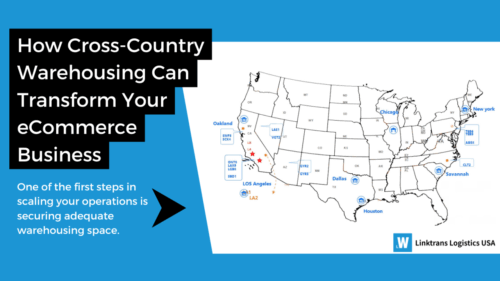
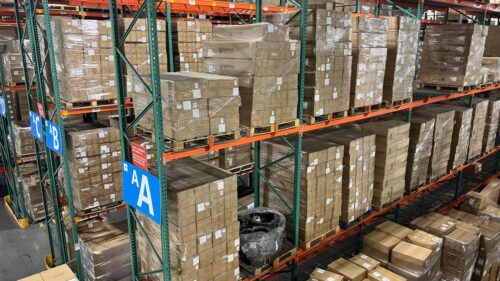
Our large-scale warehouses span 958,000 square feet across five branch offices in the US.
Table of Summary