-

English
-
Japanese
-
Korean




You want those workers to bring in as much cash as possible, right? That’s where GMROI—Gross Margin Return on Investment—comes into play. It’s like a report card for your inventory, showing you how much profit you’re making for every dollar you’ve invested in your stock.
Understanding GMROI is crucial because it helps you figure out which products are worth keeping around and which ones are just taking up space. It’s all about getting the most bang for your buck. By keeping an eye on this number, you can make smarter buying decisions, avoid overstocking, and keep your cash flow healthy.
What is GMROI
GMROI, or Gross Margin Return on Investment, is a key performance metric used in retail and inventory management to assess a business's ability to turn inventory into cash above the cost of the inventory. It measures how much gross profit a retailer earns for every dollar invested in inventory.
GMROI formula and calculation
GMROI Formula
The formula for GMROI (Gross Margin Return on Investment) is:
GMROI=CostGross Margin/Average Inventory
Where:
- Gross Margin is the difference between sales revenue and the cost of goods sold (COGS).
- Average Inventory Cost is the average value of the inventory over a specific period.
Calculation Example
Suppose you own a retail store. Over the past year, your store has generated $500,000 in sales revenue. The cost of goods sold (COGS) for these sales is $300,000. Throughout the year, your average inventory cost was $100,000.
Calculate Gross Margin:
Gross Margin=Sales Revenue−COGS=$500,000−$300,000=$200,000
Calculate GMROI:
GMROI=Gross Margin/Average Inventory Cost=$200,000/$100,000=2.0
Interpretation
A GMROI of 2.0 means that for every dollar invested in inventory, your store earns $2 in gross margin. This indicates that your inventory is generating twice the amount of profit compared to its cost, which is generally a healthy sign for a retail business.
Conditions in applying these equations
1. These metrics are snapshots of a time period and hence can be measured across a variety of time bands ranging from a week to a year. Ideally these kind of ratios are measured for a Quarter or a Year.
2. The time line used should be the same for the numerator as well as the denominator
3. Ideally speaking the metric should be measured for net margin, as this should be the actual value realised by selling a product, after applying for all the discounts offered directly on the product (called the line level discount). We see convoluted profit numbers shown by e-commerce players because they use the Gross Margin.
4. Cost of acquiring a product should ideally be the final cost of getting the product on the shelf. But since many fixed costs are applied as a percentage to be distributed across the range and depth of products, many costs are not directly attributable to each single piece sold. Hence other than applying a percentage of logistics cost to a product, rest of the costs should ideally kept outside the purview of a product costs. That means Cost of Acquiring a product should be the value of money required to produce a product (or the amount paid to a third party vendor manufacturing it), and adding the cost of shipping it to the store.
5. The inventory should be valued at the cost of acquiring the product as detailed in point 4 and not at the price at which it is sold. That is because the money invested by the business is equal to the cost of acquiring. Elaborating on this point as many examples use the Selling price to arrive at the denominator value, which is incorrect.
6. The Gross Margin of a particular product is a moving number. Hence Gross Margin is always a weighted margin of the price it was acquired and sold at.
Gross margin return on investment FAQs
Why is GMROI important?
GMROI helps businesses understand the profitability of their inventory investments. It indicates how efficiently a company is using its inventory to generate profit, guiding inventory management and pricing strategies.
What is a good GMROI value?
A GMROI greater than 1 indicates that the gross margin exceeds the cost of inventory, which is generally considered good. However, the ideal GMROI can vary by industry and business model.
How can GMROI be improved?
GMROI can be improved by increasing gross margins (e.g., through better pricing strategies or cost reductions) and by optimizing inventory levels to reduce carrying costs and improve turnover rates.
What factors can affect GMROI?
Factors affecting GMROI include changes in pricing, cost of goods sold, inventory levels, and sales volume. External factors like market demand and supplier terms can also impact GMROI.
How does GMROI differ from inventory turnover?
While both metrics assess inventory performance, GMROI focuses on profitability relative to inventory investment, whereas inventory turnover measures how quickly inventory is sold and replaced over a period.
Can GMROI be used for all types of businesses?
GMROI is particularly useful for retail and wholesale businesses with significant inventory investments. However, it may be less relevant for service-based businesses with minimal inventory.
How often should GMROI be measured?
GMROI should be measured regularly, typically on a monthly, quarterly, or annual basis, to track performance trends and make informed decisions.
What are the limitations of GMROI?
GMROI does not account for all costs associated with inventory, such as storage and handling costs. It also doesn’t consider the impact of obsolete or unsellable inventory, which can skew results.

Linkw
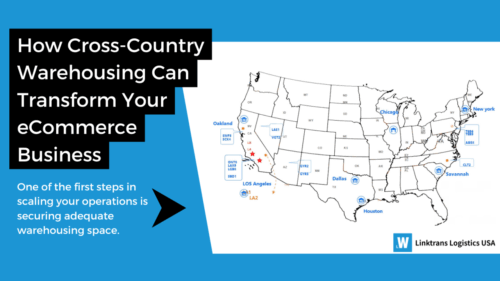
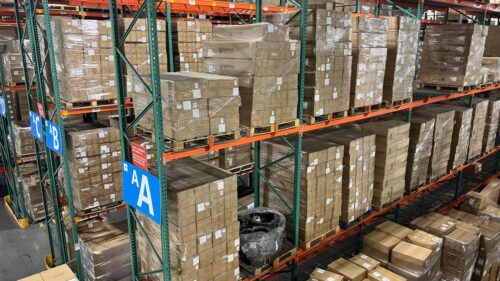
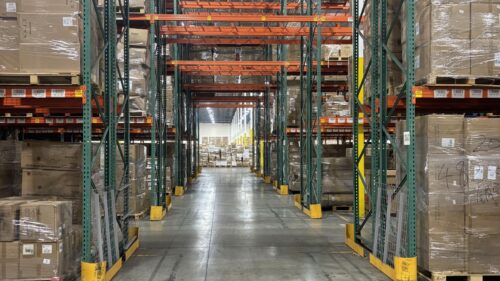
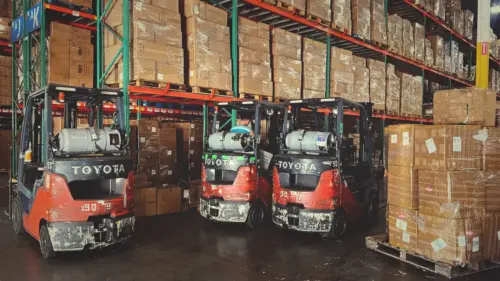
Our large-scale warehouses span 800,000 square feet across seven branch offices in the U.S.A., and the U.K.
Table of Summary