-

English
-
Japanese
-
Korean




For years, Amazon Fulfillment by Amazon (FBA) has been the undisputed default for e-commerce scaling. The value proposition was simple: hand over your inventory, and Amazon will provide the prime badge, the traffic, and the final-mile delivery.
However, as we move deeper into 2026, the landscape of U.S. commerce has fractured. Relying exclusively on FBA is no longer a growth strategy; it is a structural vulnerability. With the relentless rollout of inbound placement fees, restrictive peak-season capacity limits, and the explosive growth of alternative channels like TikTok Shop and Walmart Marketplace, enterprise brands are realizing that yielding total control of their physical supply chain to a single marketplace is a massive risk.
To achieve true omnichannel scale, protect product margins, and unlock lucrative B2B wholesale opportunities, brands must build an independent logistics architecture. Here is the enterprise playbook for diversifying your U.S. fulfillment strategy beyond Amazon FBA.
The Hidden Risks of FBA Exclusivity
FBA is a highly optimized machine, but it is optimized for Amazon’s profitability and operational efficiency, not yours. When an enterprise brand relies solely on FBA, they encounter three distinct growth ceilings:
| The Bottleneck | How It Manifests in FBA | The Enterprise Impact |
| Margin Erosion | Constant fee restructuring, including low-inventory-level fees, inbound placement fees, and aggressive dimensional weight penalties. | What used to be a predictable fulfillment cost center becomes a volatile tax on your gross margins, especially for heavy or bulky goods. |
| Inventory Throttling | Strict restock limits and capacity caps enforced right before Q4 Black Friday/Cyber Monday (BFCM). | Inability to position enough inventory to meet peak demand, resulting in stockouts and lost revenue during the most critical time of the year. |
| The Omnichannel Blindspot | Amazon Multi-Channel Fulfillment (MCF) often ships in Amazon-branded boxes, which is rejected by competitors like Walmart. | You are locked out of true wholesale opportunities (Target, Home Depot) and penalize your own Direct-to-Consumer (DTC) brand experience. |
The Blueprint: Building an Independent Logistics Anchor
Diversifying away from FBA does not mean abandoning Amazon; it means demoting FBA from your only fulfillment mechanism to just one channel among many. To do this, brands must establish an independent, asset-heavy domestic fulfillment anchor.
1. Centralizing the Inventory Pool & Strategic FBA Injection
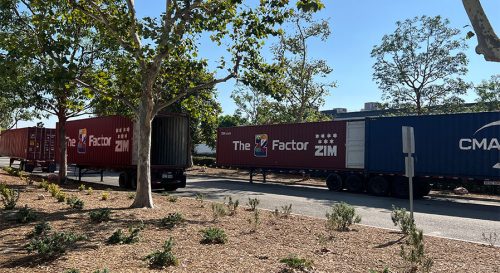
In a diversified model, you do not send all your ocean freight directly to Amazon. Amazon’s Restock Limits (IPI) are unpredictable, but regulatory scrutiny is a certainty. With the CPSC eFiling mandate taking effect today, July 8, any compliance friction can lead to frozen inventory at FBA.
A robust, self-operated fulfillment network acts as your strategic buffer zone. Through rapid cross-docking and precise FBA injection, brands can securely land their bulk shipments in a compliant U.S. domestic hub first. You maintain control of your inventory and drip-feed optimized shipments into Amazon only when necessary, safeguarding your cash flow and account health. Simultaneously, this same central inventory pool fulfills your independent Shopify orders, TikTok Shop surges, and B2B wholesale orders.
2. Upgrading for Oversize and Bulky Freight
FBA’s automated conveyor belts are built for standard-sized parcels. If your brand sells furniture, outdoor gear, or large home appliances, FBA’s oversize surcharges will destroy your P&L. An independent, self-operated fulfillment network is purpose-built to handle these complexities. By utilizing heavy-duty cantilever racking, clamp trucks, and custom carton-optimization technology, a specialized domestic hub slashes the dimensional weight (DIM) penalties that Amazon and standard carriers impose on bulky goods.
3. Unlocking B2B Wholesale and Retail Compliance
If you land a massive Purchase Order from a major U.S. retailer, Amazon FBA cannot fulfill it. Big box retailers demand flawless execution of 100-page routing guides, highly specific Ti-Hi pallet configurations, and precise SSCC-18 barcode labeling. Moving beyond FBA means partnering with a domestic fulfillment network that operates dedicated B2B staging zones and employs a highly trained core workforce capable of executing flawless Electronic Data Interchange (EDI) integrations to prevent retailer chargebacks.
Securing Your Omnichannel Future with LinkW
Breaking free from FBA dependency requires more than just renting space in a fragmented, broker-run 3PL. It demands a logistics partner that matches Amazon’s operational certainty while returning control of the brand and data back to you.
This is where LinkW acts as your ultimate omnichannel anchor.
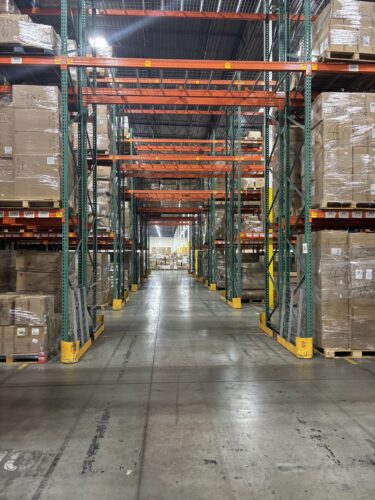
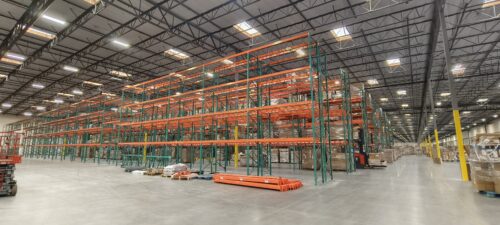
By operating a robust, self-operated domestic fulfillment network strategically positioned across the United States, LinkW provides the hard physical infrastructure required to scale beyond the marketplace. Because LinkW facilities are entirely self-operated, brands gain the precise inventory control needed to securely buffer imports, execute rapid FBA injection, and master stringent B2B retail compliance—all from a single, unified inventory pool.
Whether you need to bypass carrier gridlock during peak season, eliminate oversize surcharges, or simply take back ownership of your customer’s unboxing experience, LinkW delivers the manufacturing-level precision your supply chain demands.
In 2026, the brands that win will be those that control their own final mile. Diversify your logistics, protect your margins, and scale your U.S. presence with absolute certainty through LinkW fulfillment.

Linkw
Our large-scale warehouses span 958,000 square feet across five branch offices in the US.
Table of Summary