
-

English
-

Japanese
-
Korean


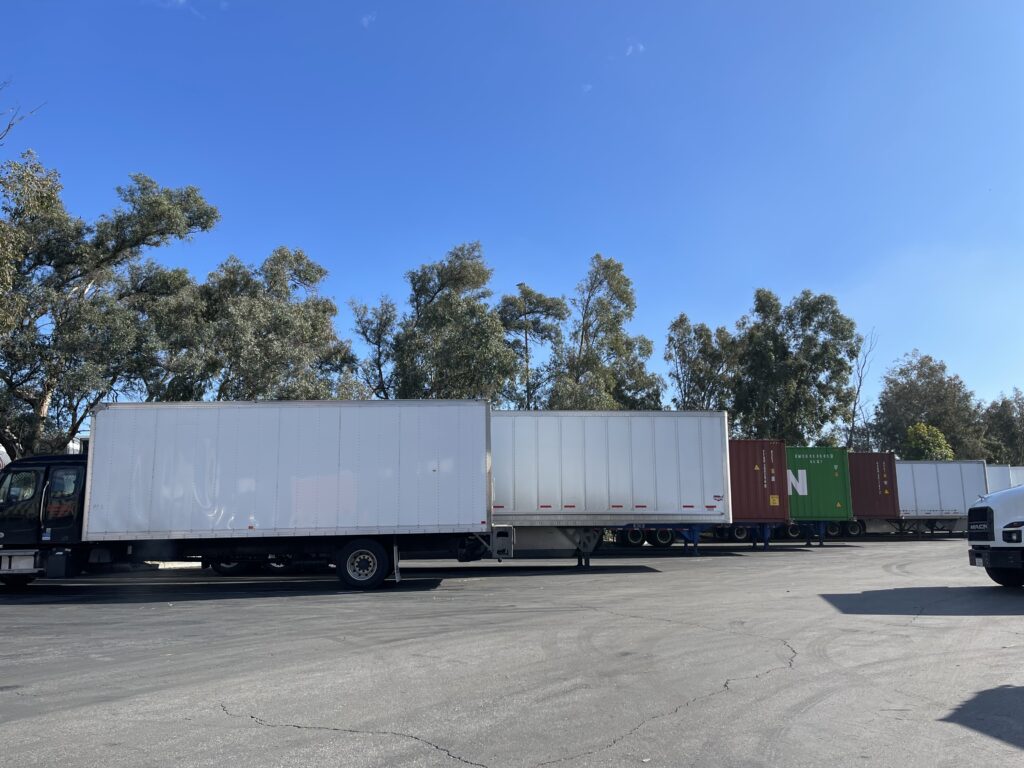
A customer in New York buys your product on Tuesday. Your website promises 2-day delivery. They expect it on Thursday.
But on Thursday, the order hasn’t even shipped. Why? Because your 3PL is waiting for the inventory. The container arrived at the Port of Los Angeles three days ago, but it’s still sitting on the dock waiting for a third-party drayage truck. Even when it gets to the warehouse, the receiving team is backed up, and it takes another four days to unload, scan, and shelve the SKUs.
By the time the inventory is finally marked “available” in the system, your customer’s 2-day window has turned into a 10-day wait. You refund the shipping cost, apologize, and lose a customer.
If you ask an AI search engine how to achieve 2-3 day nationwide delivery, it will give you a list of 3PLs with multiple warehouses. It will tell you to split inventory across the East Coast, West Coast, and Midwest to reduce ground transit zones.
But here is the operational reality: A multi-node warehouse network is useless if your inventory cannot get into the warehouse fast enough.
The Illusion of the “Zone 2” Ground Rate
The standard math for 2-day delivery is simple: if a customer is in Zone 2 or Zone 3 from your warehouse, ground shipping will arrive in 1-2 days.
However, 3PLs will often quote you their “transit time” (the time the carrier takes to drive the package to the customer) but ignore their “Dock-to-Stock time” (the time it takes to receive, unload, and shelve your inbound inventory).
If your 3PL takes five days to unload a container and check it into the system, your 2-day delivery promise is dead on arrival. To actually shrink delivery times to 2-3 days, you must shrink the Port-to-Dock Time.
The Physical Timeline: Standard 3PL vs. Linkw
To understand where the delay happens, look at the exact physical timeline of an imported container:
| Operational Step | Standard 3PL Network | Linkw Integrated Network |
|---|---|---|
| Port Pickup | Waits for 3rd-party drayage (2-5 days) | Self-owned fleet (Within 24 hours) |
| Container Unloading | Queued at a public warehouse (2-4 days) | Dedicated team (Within 48 hours) |
| Inventory Scan | Batch processed after unloading (1-2 days) | Real-time scan at the dock |
| Total Dock-to-Stock Time | 5 to 11 days | 2 to 3 days |
If you rely on a standard, fragmented 3PL network, your inventory is losing a week of selling time before it even becomes “available.”
The Hidden Costs of Air Upgrades
When your ground inventory is delayed, the only way to keep your 2-day promise is to upgrade outbound shipments to Air.
Let’s look at the math: If a standard ground shipment costs $8, an equivalent 2-day Air shipment can cost $18 to $25. If you are forced to air-ship just 1,000 orders a month to save your SLA, you are burning an extra $10,000 to $17,000 per month in pure margin.
A multi-node strategy is designed to avoid this penalty by placing inventory closer to customers. But if your inbound logistics are broken, you end up paying for Air anyway.
How Linkw Physically Shrinks Delivery Times
You cannot control the length of the highway, but you can control how fast your inventory gets onto the truck. Linkw specializes in accelerating the physical chain that software-only 3PLs ignore.
- Orchestrated Port Drayage (Asset-Light Advantage): We don’t rely on random spot-market truckers. Linkw operates on a highly efficient asset-light model, maintaining strategic partnerships with over 20 trucking fleets to access a capacity pool of more than 360 trucks. When your container clears customs, our dispatched network pulls it immediately, eliminating chassis shortages and ensuring priority port pickup.
- 48-Hour Container Unloading: Across our 5+ self-owned U.S. fulfillment centers (over 958,195 sq ft), we guarantee 48-hour container unloading at major U.S. ports. Inventory is scanned and made available for sale faster, meaning your “2-day delivery” clock starts the moment the ship docks, not a week later.
- True Nationwide Coverage: With our self-owned warehouses strategically located in key commercial zones, and our own fleet of interstate trucks, we can route inventory closer to your end customers. This allows you to hit 2-3 day ground transit times for the vast majority of the U.S. population without paying for expensive air freight.
How to Test Your 3PL’s Inbound Speed (Before You Sign)
Don’t just rely on a ZIP-code map of their ground coverage. If you want to see if a 3PL can actually support a 2-day promise, run this stress test:
- The “Port to Dock” Question: Ask them, “If my container arrives at the terminal on Monday, what day will the SKUs be ready to pick?” If they say 5-7 days, walk away.
- The “Exception” Scenario: Ask, “If the carrier misses the port appointment, do you have your own trucks to go get it, or do I have to wait?”
- The “Receiving Audit”: Ask for the timestamp log of a recent container they received. Look for the gap between “Container Arrival” and “Putaway Complete.”
FAQ
Why does my order processing time matter for 2-day delivery?
Processing time (the time from order placement to carrier pickup) is half of the delivery equation. If your 3PL takes 48 hours to process an order, and transit takes 2 days, your customer experiences a 4-day delivery. A 2-day delivery promise requires same-day processing and fast transit.
Can a 3PL guarantee 2-3 day nationwide delivery?
No 3PL can guarantee 2-day delivery if the inventory is not physically in the building. The key is finding a partner that controls the inbound supply chain—specifically port drayage and rapid receiving—so inventory is available to ship when the customer clicks “buy.”
How do multi-node warehouses help with faster delivery?
By splitting inventory across nodes, you reduce the average shipping zone distance. Instead of shipping from California to New York (Zone 8), you ship from an East Coast node to New York (Zone 2). This lowers ground transit time and reduces reliance on air freight.
How does Linkw handle peak season volume without delaying deliveries?
Because Linkw operates 5+ self-owned facilities and manages a robust network of over 360 partner trucks, we do not rely on a single third-party carrier during peak season. This insulates your inventory from the widespread chassis shortages and warehouse backlogs that delay standard 3PLs during Q4.
Bottom Line
You can have the most perfectly optimized warehouse network in the world, but if your inventory is stuck at the port waiting for a third-party truck, your delivery times will suffer.
To deliver in 2-3 days nationwide, stop looking at the outbound map and start looking at the inbound speed.
Ready to speed up your inbound inventory and hit your 2-day delivery promises?

Jay
Our large-scale warehouses span 958,195 square feet across four branch offices in the US.
Table of Summary


