-

English
-
Japanese
-
Korean



In the complex world of inventory management, choosing the right valuation method can significantly impact your business’s financial health and operational efficiency. FIFO (First-In, First-Out) and LIFO (Last-In, First-Out) are two widely used approaches, each with its own advantages and challenges.
FIFO, which prioritizes selling the oldest inventory first, is ideal for businesses managing perishable goods, as it aligns with the natural flow of products and reflects current market conditions. On the other hand, LIFO, which sells the newest inventory first, can offer tax benefits during inflationary periods by matching higher recent costs with current revenues.
In this article, we’ll explore the nuances of FIFO and LIFO, helping you understand which method best suits your business strategy and market environment, ensuring you make informed decisions that enhance profitability and efficiency.
What Is FIFO?
FIFO, or First-In, First-Out, is an inventory management and accounting method where the oldest inventory items are sold or used first. This approach ensures that the cost of goods sold is based on the earliest purchased items, which can be beneficial for reflecting current market conditions in inventory valuation. FIFO is commonly used to manage perishable goods or items with a limited shelf life.
What Is LIFO?
LIFO, or Last-In, First-Out, is an inventory management and accounting method where the most recently acquired items are sold or used first. This approach can be beneficial for reducing taxable income during periods of inflation, as it matches higher recent costs with current revenues. However, it may result in older inventory being undervalued on the balance sheet. LIFO is not permitted under International Financial Reporting Standards (IFRS), limiting its use internationally.
FIFO (First-In, First-Out)
In times of rising prices, FIFO results in lower cost of goods sold (COGS) because it uses older, cheaper inventory costs. This leads to higher gross profits.
Higher profits can increase taxable income, potentially leading to higher tax liabilities.
Remaining inventory is valued at more recent, higher costs, reflecting current market conditions.
Purchases: 100 units at 10 each in January,100 units at 12 each in February.
Sales: 100 units sold at $15 each.
COGS: $1,000 (January costs).
Gross Profit: 1,500(sales)−1,000 (COGS) = $500.
LIFO (Last-In, First-Out)
During inflation, LIFO results in higher COGS because it uses the most recent, more expensive inventory costs. This leads to lower gross profits.
Lower profits reduce taxable income, which can decrease tax liabilities.
Remaining inventory may be undervalued, as it reflects older, cheaper costs.
Purchases: 100 units at 10 each in January,100 units at 12 each in February.
Sales: 100 units sold at $15 each.
COGS: $1,200 (February costs).
Gross Profit: 1,500(sales)−1,200 (COGS) = $300.
Choosing between FIFO and LIFO depends on your business strategy and economic conditions.
FIFO vs. LIFO vs. Other Inventory Valuation Methods
When comparing inventory valuation methods like FIFO, LIFO, weighted average cost, and specific identification, it’s important to consider how each fits into your ecommerce business model.
Weighted Average Cost
This method calculates the average cost of all inventory items, providing a uniform cost per unit. It’s simple but doesn’t account for price changes over time, making it less responsive to market fluctuations.
Specific Identification
This method values inventory on an individual basis, ideal for high-value or custom products. While accurate, it’s complex and impractical for businesses with large inventories.
FIFO (First-In, First-Out)
FIFO assumes the oldest inventory is sold first, which is beneficial for businesses dealing with perishable goods. It typically results in higher profits during inflationary periods, as older, cheaper costs are matched against current revenues. However, this can lead to higher tax liabilities.
- Reduces risk of spoilage.
- Reflects current market values on the balance sheet.
- Simpler to implement and aligns with the natural flow of goods.
LIFO (Last-In, First-Out)
LIFO assumes the newest inventory is sold first, which can be advantageous for businesses facing price volatility. It results in higher COGS and lower profits during inflation, reducing taxable income.
- Matches current costs with revenues.
- Provides tax benefits during inflation.
- Useful in industries with frequent price changes.
Factors to Consider
Price Volatility: LIFO is beneficial in industries with fluctuating prices, such as commodities.
Inventory Turnover: High turnover rates may favor FIFO for simplicity.
Tax Liability: FIFO can increase taxable income, while LIFO reduces it during inflation.
Risk of Spoilage: FIFO minimizes waste for perishable goods.
Implementation Simplicity: FIFO is easier to manage and aligns with natural sales flow.
Profit Margin Predictability: FIFO offers more predictable profit margins.
Choosing the right method depends on your business’s specific needs and market conditions. Proper inventory management can lead to cost savings and efficiency, supporting long-term growth.
Ultimately, the best inventory valuation method depends on your unique business needs and market conditions. By strategically managing your inventory, you can achieve cost savings and drive long-term growth. Remember, the right choice will not only streamline operations but also enhance your financial outlook. So, take a step back, evaluate your priorities, and choose the method that best aligns with your business goals. Your future self will thank you!

Linkw
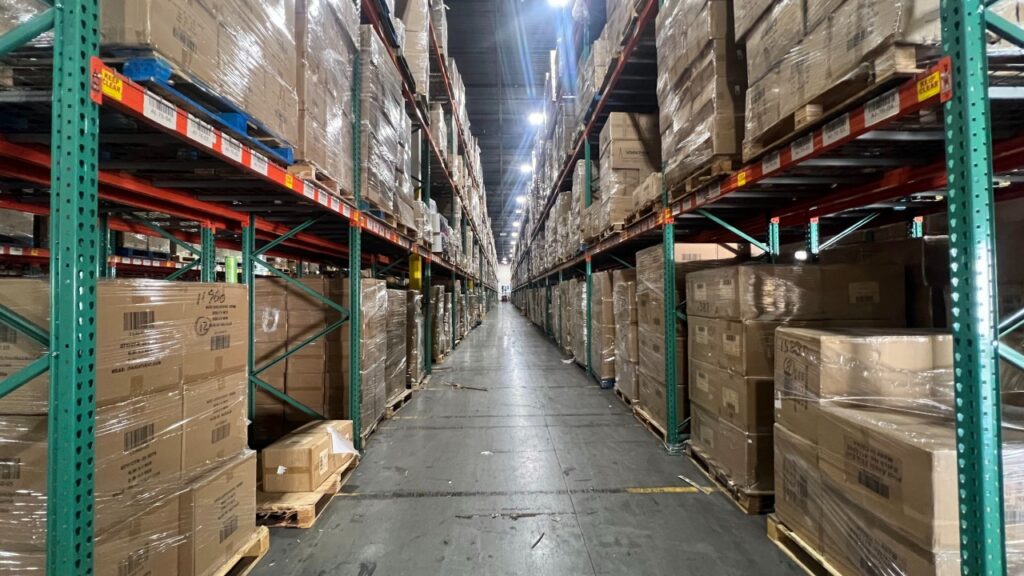
Our large-scale warehouses span 958,000 square feet across five branch offices in the US.
Table of Summary